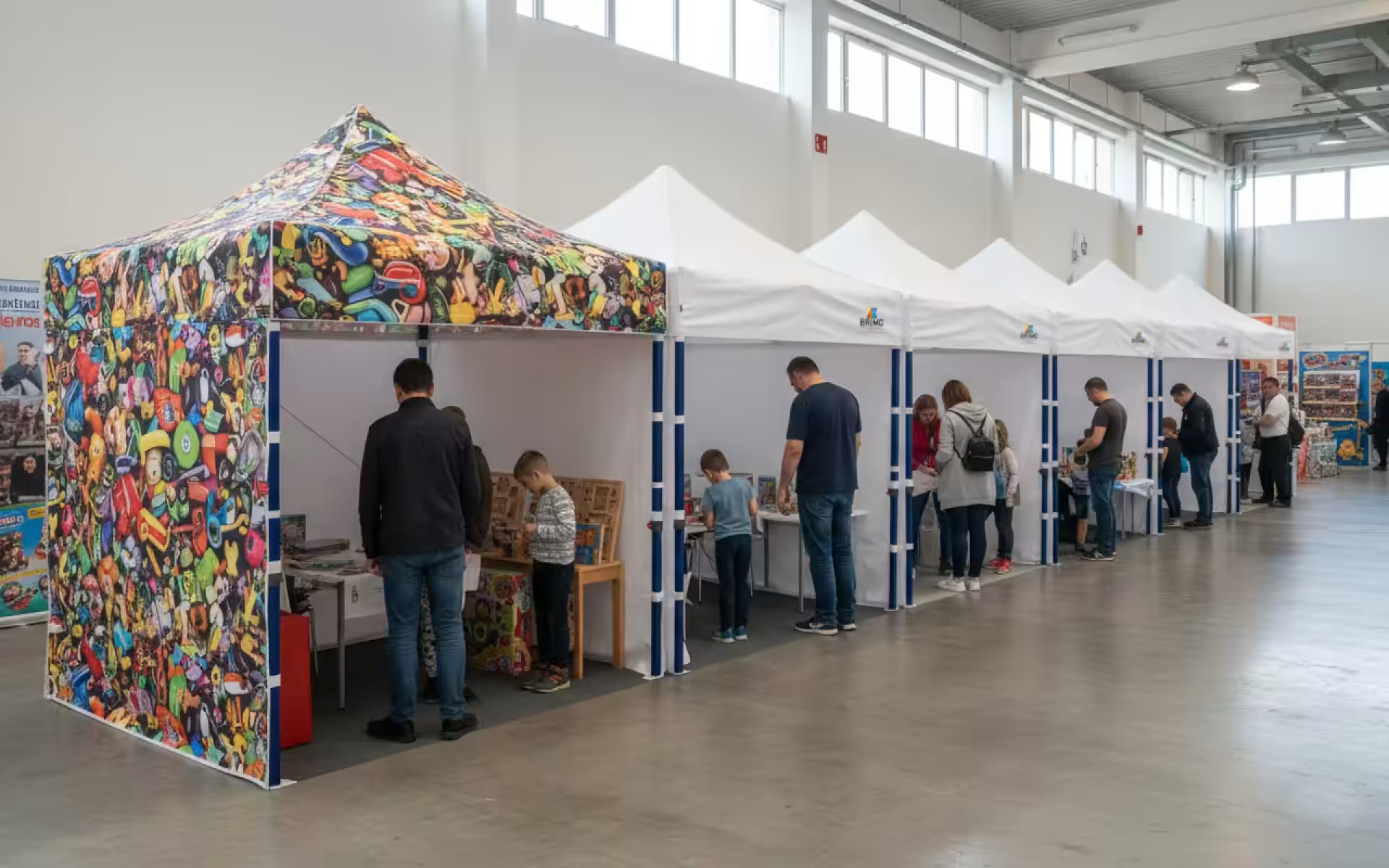
Invisible sellers don't sell: Why tent branding is a key pillar of event marketing
The current exhibition and event space is a battlefield for customer attention, often lasting only fractions of a second. In the flood of visual stimuli, branded pop-up gazebos cease to be merely a simple shelter from the sun or rain. They become the primary carrier of your corporate identity. The decision between a "plain" tent and one with professional personalisation is, in reality, a choice between an anonymous background and the position of a leader dominating the space.
Quality branding goes beyond aesthetics – it taps directly into the psychology of purchasing decisions. Customers subconsciously attribute higher credibility and quality to products that are presented under a cohesive, visually coordinated canopy. From a Return on Investment (ROI) perspective, a printed tent acts as a mobile billboard, working to build brand awareness with every single pitch, without any additional fees for advertising space. However, for this effect to last, it is essential to understand that not all printing is created equal. Factors such as polyester fibre structure, long-term exposure to UV radiation, and mechanical stress when folding require technological solutions that won't fade or crack after just the first season.
Technology versus Purpose: How to choose a marking method for specific business needs?
Selecting the right graphic application technique is just as critical as choosing a sturdy steel or aluminium frame. It is a technical decision that must find a balance between expected lifespan, complexity of the graphic design, and the available budget. Is your goal a sharp, high-contrast logo visible from a distance, or photorealistic graphics covering the entire roof, drawing the visitor into your brand's story?
The world of large-format printing today offers solutions precisely targeted at various usage scenarios – from flexible heat transfer vinyls and versatile PVC banners, to indestructible sublimation that becomes a direct part of the fabric. In the following lines, we will look at these methods "under the microscope", reveal their technological specifics, and help you determine which one will bring the highest added value to your presentation.
Deep Dive: 4 printing technologies under the magnifying glass
When choosing printing, we often face a dilemma between price and the final effect. There is no single universal solution for everyone. While for a construction company the priority is text readability and resistance to mechanical abrasion, a marketing agency will require photorealistic colour fidelity. To avoid the disappointment of a peeling logo or faded graphics, let's look in detail at the four main methods that dominate the promotional tent market.
1. Transfer Printing: The king of colour flexibility
This method represents the ideal compromise between quality and variability. The process involves digitally printing the motif onto a special carrier (vinyl/foil), which is then transferred directly onto the tent's polyester fabric using high pressure and heat.
When to choose it: It is the best choice if your logo contains colour gradients, shadows, or multiple colours, but you don't need to print the entire roof surface. Transfer vinyl creates a fine, flexible layer on the fabric that mimics the movement of the material. Thanks to modern adhesives, this bond is extremely strong and withstands repeated folding of the tent, provided it is applied with a professional heat press, not home methods.
2. FLEX / FLOCK Vinyl: The indestructible classic for sharp contours
If you are looking for maximum durability and contrast, cut vinyl technology (plotting) is unrivalled. No ink is used here – the graphics are cut from pre-coloured, highly durable vinyl and then "baked" into the fabric.
Difference between FLEX and FLOCK:
• FLEX: Has a smooth, rubbery surface. It is thin, elastic, and looks very modern. Ideal for text and simple logos.
• FLOCK: Has a velvety, suede-like surface that stands out in relief (3D effect). It looks luxurious and exclusive.
Technical benefit: Since the pigment is part of the vinyl material itself, this print is practically immune to UV radiation – the colour won't fade even after years in direct sun.
It is the most durable choice for text information (company name, website).
3. PVC Banner: Modular solution for dynamic business
Permanent printing isn't always an advantage. For businesses that frequently change offers, sponsors, or event names, fixed printing is limiting. The solution is a PVC banner attached using industrial-strength Velcro.
Why it's a "smart" choice: Imagine one weekend you are selling honey at a farmers' market, and the next you are promoting beekeeping courses at an exhibition. With one gazebo and two different banners, you can handle this without needing to buy two structures. The PVC material is also washable and extremely weather-resistant. Visually, it might look like an "add-on" to the tent, but the economic efficiency of this solution is key for many entrepreneurs.
4. Sublimation Printing: Visual revolution without borders
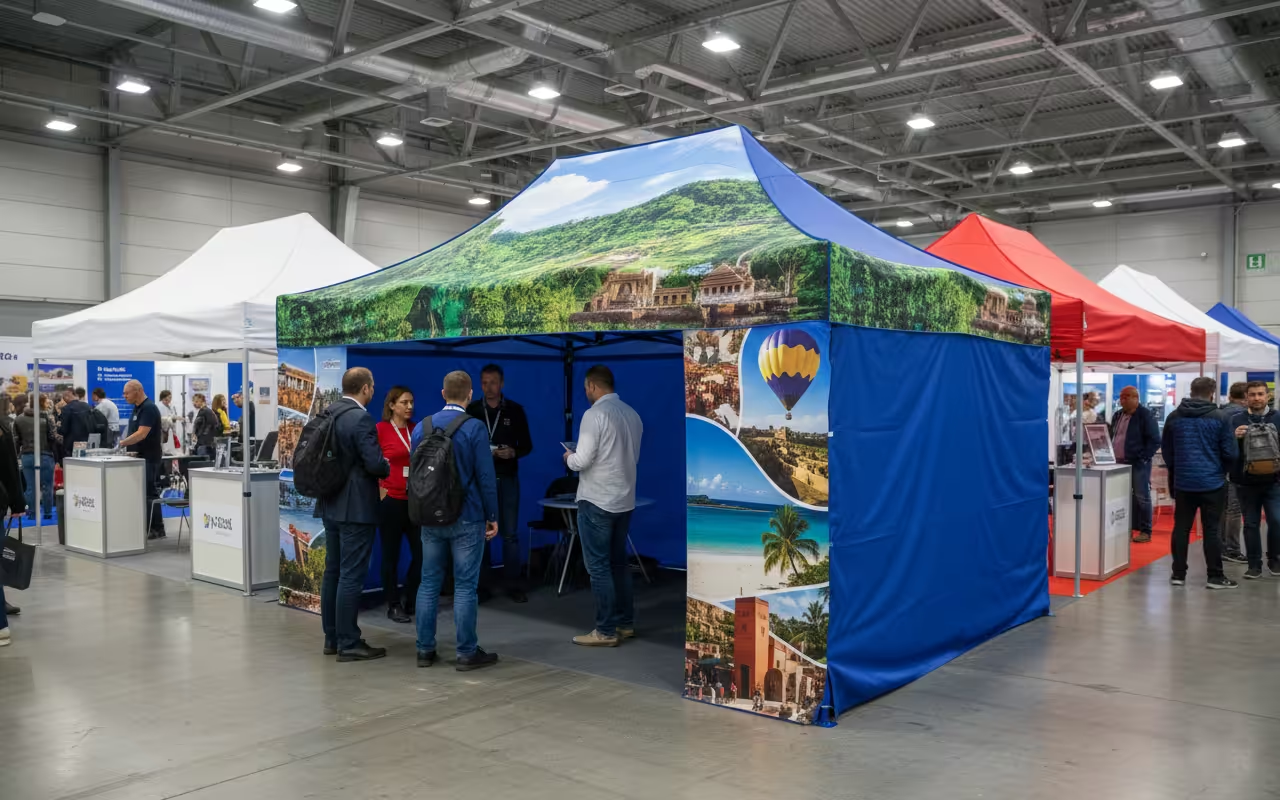
This is the "Ferrari" of printing methods. Sublimation is not a surface sticker – it is a chemical process where ink turns into gas under heat and penetrates deep into the fibre structure. Upon cooling, the colour becomes part of the fabric.
Advantages for the most demanding:
1. Unlimited graphics: You can have a product photo, a complex pattern, or full-surface branding in the exact Pantone shade of your brand on the tent.
2. Durability: The print cannot be scratched off, doesn't crack, and you can even wash the fabric (if removable).
3. Professional look: The gazebo looks like one cohesive design piece. It is the ideal choice for big brands and exhibitors
where the visual impression comes first.
The decision that defines your success: Final verdict
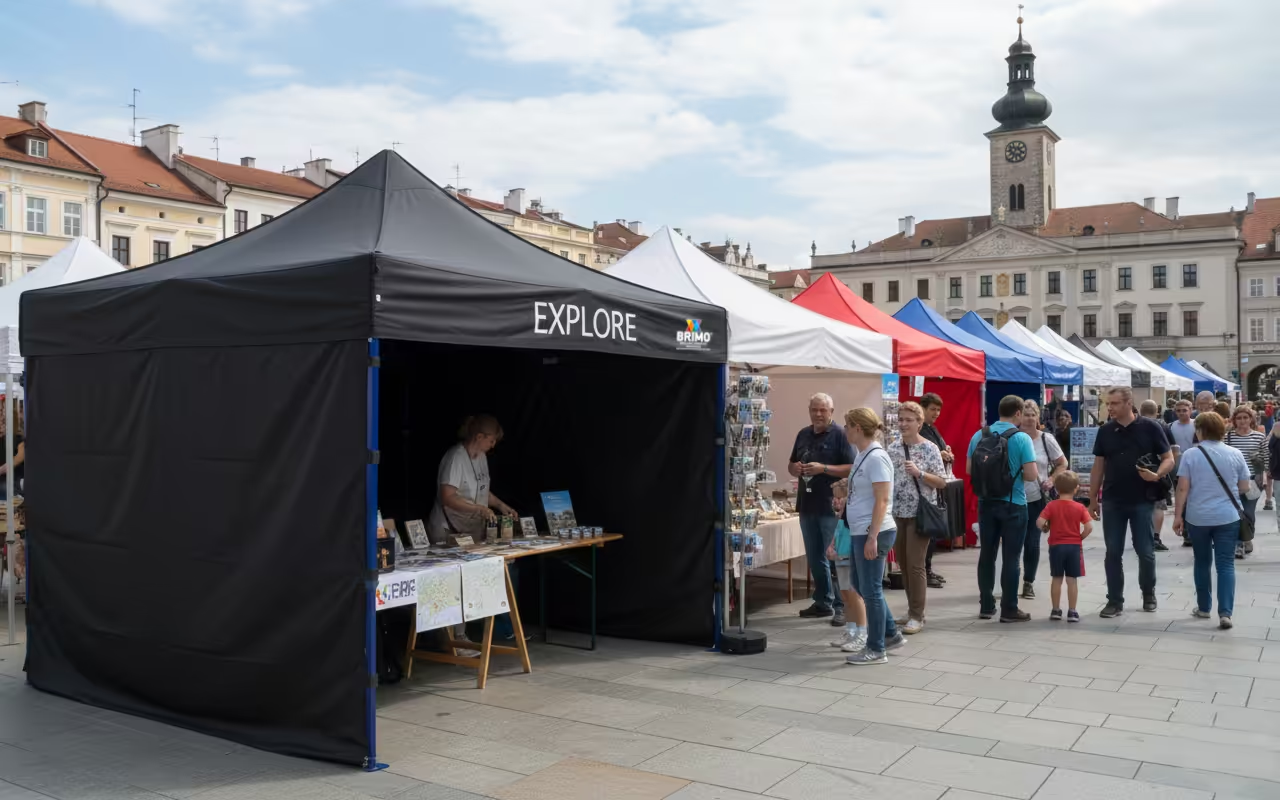
Choosing the ideal printing technology isn't about looking for the objectively "best" method on the market, but finding the "most suitable" one for your specific business model. While a start-up entrepreneur will appreciate the flexibility and low entry costs of PVC banners, an established corporation will likely require the uncompromising prestige of full sublimation. Each of the presented methods – whether it's precise FLEX, colourful transfer, or immersive sublimation – has its firm place in modern marketing.
Remember that a promotional tent is often the first point of physical contact with the customer. The quality of your logo's finish and colour stability send a subconscious signal about the stability and professionalism of your company before your salesperson even says the first word. Saving in the wrong place can mean a loss of trust, while a strategic investment in visuals pays off in the form of higher footfall to your stand and better brand recall.
Turn your vision into reality with experts
Don't leave the visual side of your business to chance. At BRIMO, we understand that every detail counts. Our team of specialists is ready to guide you through the entire process – from consulting on the appropriate technology and preparing the graphic design, to the final realisation on top-quality materials.
Don't wait for the competition to overshadow you. Contact us today and together we will create a shelter that not only protects your goods from the weather but becomes your most powerful and visible sales representative in the field.
Written by:
Marta Linder
About the Author
MSc Marta Linder – an expert in selecting and tailoring designer fabrics and textile specializations, focusing on quality, durability, and flawless execution. She furthered her knowledge in textiles during her studies at Manchester Metropolitan University.
She has an extensive professional career in tailoring and developing designer fabrics for outdoor tents. As a textile expert at BRIMO, she works on enhancing material quality, aesthetics, and durability standards.
In her articles, she focuses on the proper care of fabrics for Pop up gazebo models, canopy maintenance, custom printing, and selecting durable materials for long-lasting outdoor use.