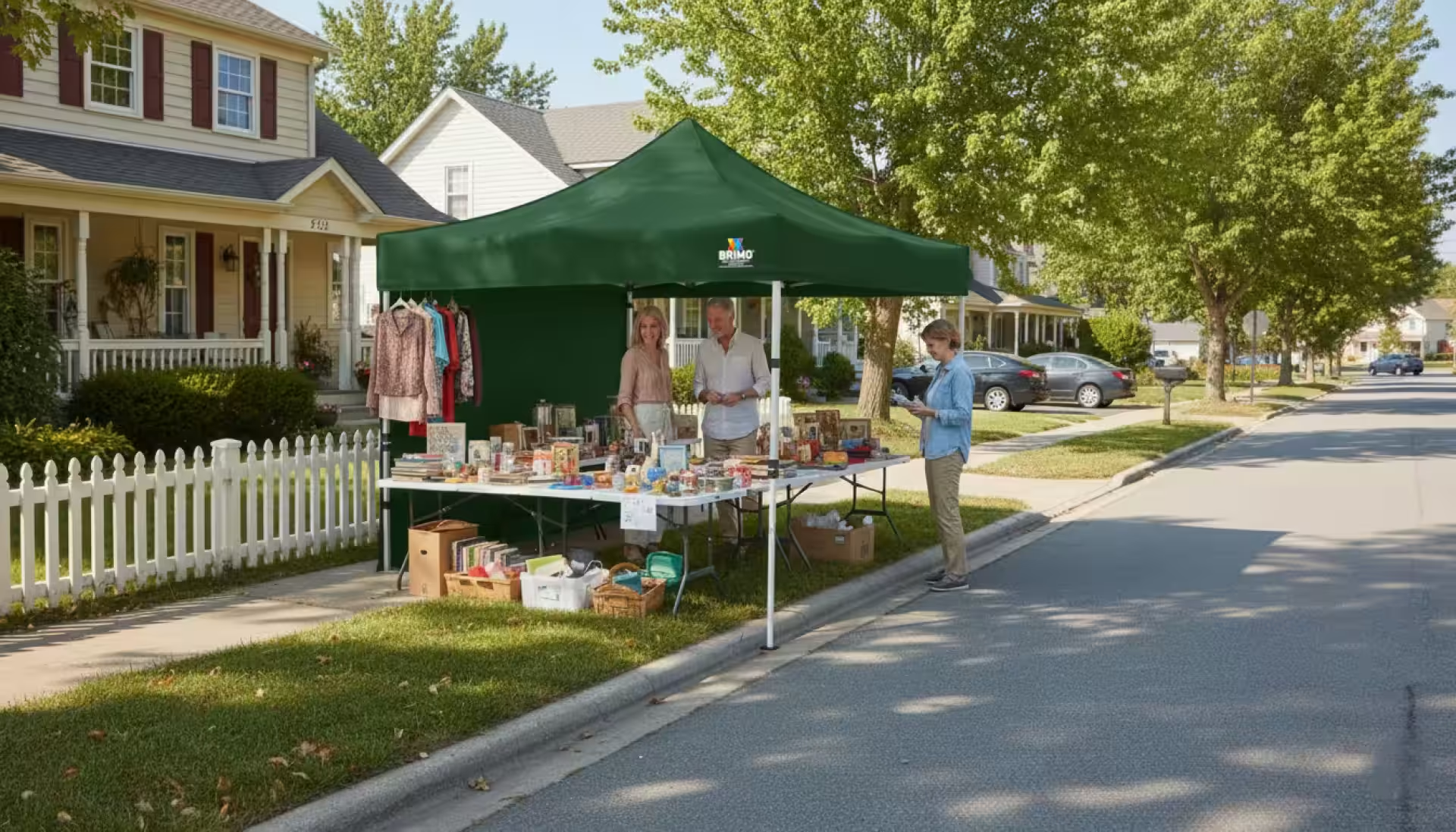
Farm Gate Sales: Strategy for Success for the Modern Farmer
The current food market is undergoing a significant transformation. Customers are increasingly turning away from impersonal supermarkets and looking for authenticity, freshness, and direct contact with the grower. Farm gate sales (Direct sales) are no longer just about garden surplus placed on an old table; they have become a sophisticated commercial channel requiring a professional approach. For the primary producer, this means responsibility not only for product quality but also for sales culture. The visual aspect of your sales point is often the first signal to the customer, speaking volumes about hygiene, seriousness, and the standard of your agricultural production.
The Key Role of Visual Identity and Goods Protection
In mobile trading or selling directly from the farm, you face two main challenges: unpredictable weather and the need to stand out from the competition. This is exactly where functionality meets marketing. A quality shelter is not just passive protection against UV radiation, which can spoil sensitive fruit within hours, or against the rain that drives customers away. It is your business card. Professional pop-up advertising gazebos provide an immediate solution to these problems. They create a clearly defined, safe space that the customer subconsciously perceives as a "shop".
Investing in quality equipment sends a strong psychological signal: "I care about my products so much that I protect them in the best possible way." This detail often decides whether a passerby just walks past or stops and buys. In the following lines, we will look at how to manage farm gate sales legislatively and technically so that it is not only legal for you but also maximally effective and profitable.
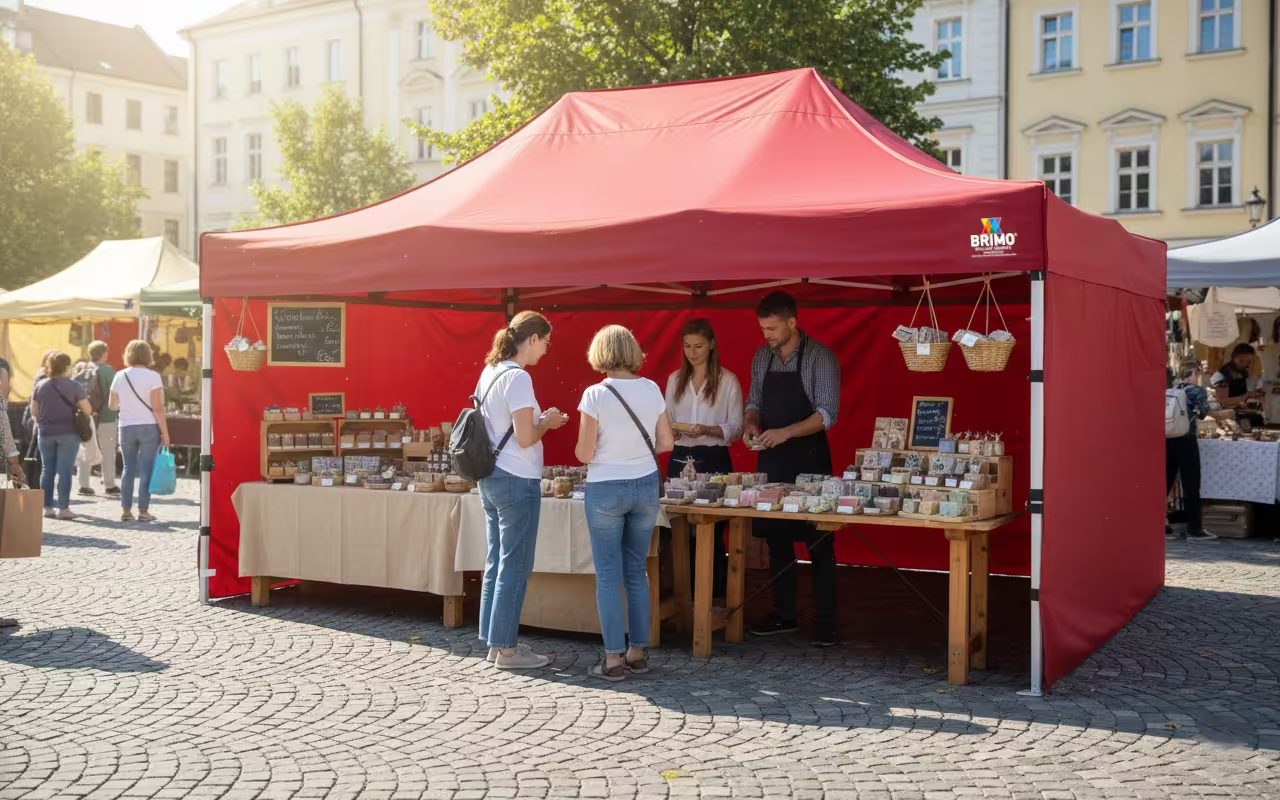
Selling "from the boot" vs. Professional Sales Point
Many beginner sellers, in an attempt to save costs, choose the easiest path – they open the boot of their van or personal car and sell directly from it. Although this may seem economical, in the long term, it is a strategy that stunts your business growth. The customer in 2024 is demanding. They require not only product quality but also a sales culture. Selling from a car often evokes "huckstering" or a low hygiene level, whereas a stall signals stability and pride in one's own harvest.
The difference is not only in aesthetics but mainly in service capacity and goods protection. While at a car you serve one person and others have to wait (often in the sun or rain), under a pop-up advertising gazebo, you create a space where several people can view the goods simultaneously without getting in each other's way. Below we present a comparison of these two approaches from the perspective of customer experience and logistics.
| Criterion | Selling from the car boot | Selling under an advertising gazebo |
|---|---|---|
| Hygienic Impression | Low (proximity to exhaust, road dust, goods in tight space) | High (goods on tables, separated from the ground and protected by a roof) |
| Thermal Comfort of Goods | Risky (car acts as a greenhouse, goods heat up quickly) | Optimal (air circulation and shade prolong freshness) |
| Credibility | Dubious ("Here today, gone tomorrow") | Professional ("Serious farmer with own equipment") |
| Buying Behaviour | Fast, stressful purchase ("I buy and go") | Slower, experiential purchase (Customer lingers, tastes, buys more) |
Legislative Risk of Selling "Without a Roof"
It is important to note that hygiene regulations for mobile food sales require goods to be protected from external weather influences and pollution. Selling directly from an open boot in a dusty car park can be evaluated during an inspection by the Food Safety Authority or Local Health Office as a violation of good hygiene practice. Investing in a gazebo is therefore also an investment in legislative security, which protects you from unnecessary fines.

From "Roadside Seller" to Sought-After Local Brand
Successful direct selling is not a sprint, but a marathon. Your goal is not just to sell once, but to build a community of customers who will return for quality they cannot find in the supermarket. Professional pop-up advertising gazebos serve as a solid foundation in this process. They give your work a stamp of seriousness and distinguish you from casual sellers. Remember that in the eyes of the customer, the quality of your stall is subconsciously transferred to the quality of your products. Invest in your image and the market will reward you with loyalty.
Other Frequently Asked Questions from Sellers
1. Can I print my own logo or farm name on the gazebo?
Definitely yes, and it is highly recommended. Printing on the valance or roof of the gazebo acts as your business card visible from afar. Customers thus more easily remember that the best apricots are "at Murphy's". Without branding, you are just "that gentleman in the red tent", with a logo you become a local legend.
2. What if I sell on a concrete car park and cannot anchor the gazebo with pegs?
For these cases, there are special steel weights or sandbags that attach to the legs of the gazebo. They ensure stability even on tarmac or paving where it is not possible to use anchor pegs. A flying gazebo is certainly an attraction, but it could turn your vegetables into an unplanned fruit salad scattered all over the car park!
Written by:
Alex Martin
About the Author
Alex Martin – expert in portable structures and tent systems with over 10 years of experience in the field of mobile solutions for events and industrial applications.
He graduated in Civil Engineering from the Technical University in London and has long collaborated with the brand BRIMO in the development and testing of products that combine safety, rapid assembly, and material durability.
His articles focus on practical advice regarding the selection, maintenance, and safe use of pop-up gazebos.