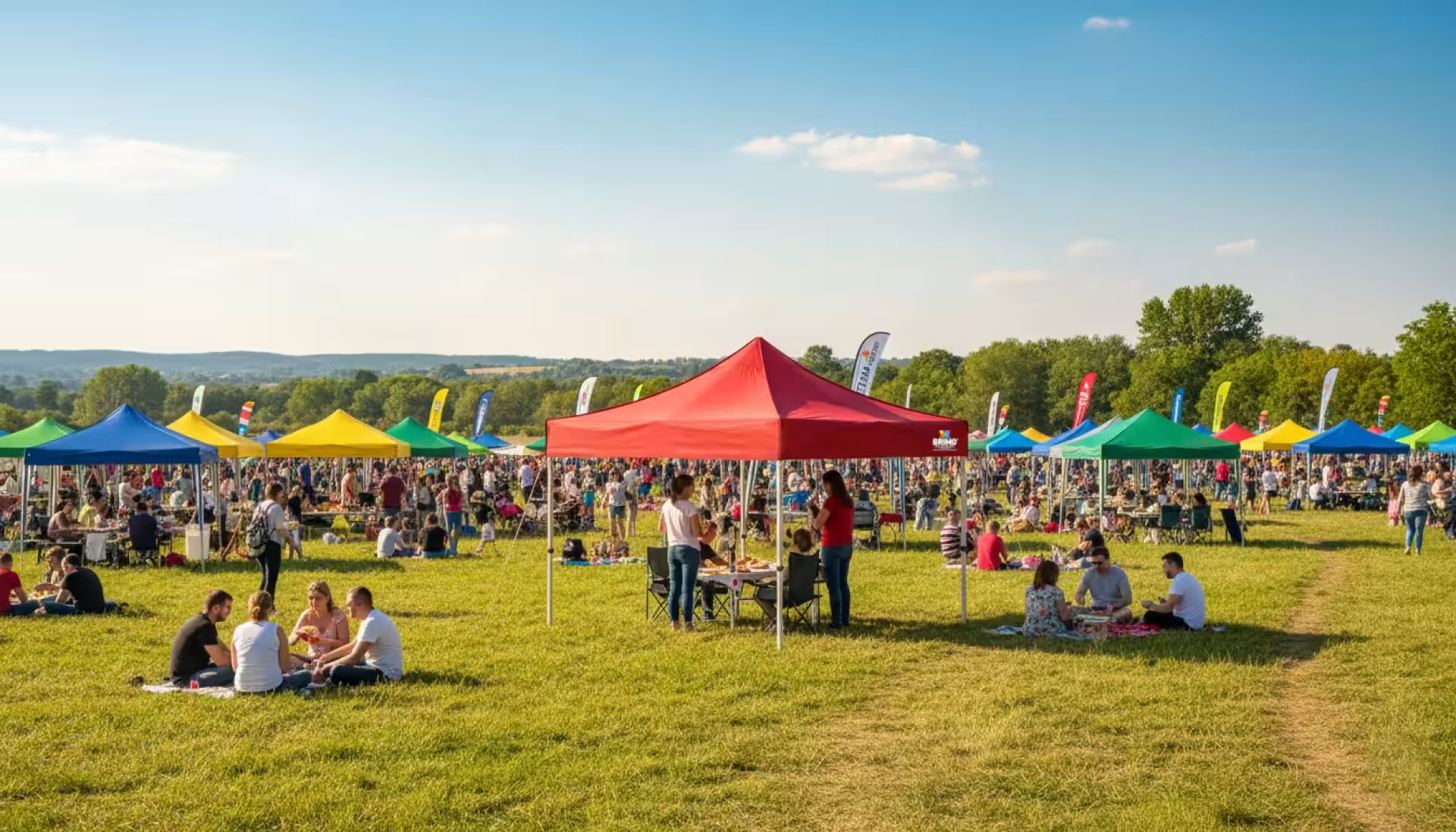
Waterproof Pop-Up Garden Gazebos: Certainty for Your Outdoor Plans
Organising a garden party, barbecue, or family picnic requires precise planning. The only factor you often cannot control is the changeable weather. This is precisely where waterproof pop-up garden gazebos come into play, representing the fine line between a successful event and a premature retreat indoors. It's not just about an ordinary temporary shelter; we are talking about a stable, mobile solution that defines the comfort of modern outdoor living. However, a perfect setting inevitably also includes folding tables, which transform the lawn under the gazebo into a full-fledged and cultured dining area.
Technological Protection Against Rain and Sun
Not every tent can provide real security. A quality model must withstand not only a sudden summer shower but also long-term UV radiation, which can be exhausting. Modern materials with an internal rubberised layer ensure that everything under the roof remains dry, while providing pleasant coolness during the heat. Investment in a waterproof variant is essentially insurance for your well-being – whether you are serving lunch or relaxing with friends, the weather ceases to be a limiting factor.
Efficiency and Mobility Without Compromise
Nowadays, time is the most precious commodity. Many people fear complicated and lengthy assembly, but the modern construction of these gazebos brings a revolution in use. Thanks to the scissor system, you can create a full-fledged and stable shelter within a few minutes, and completely without the need for tools. This aspect is crucial for spontaneous actions or situations when the sky suddenly clouds over and you need to react immediately.
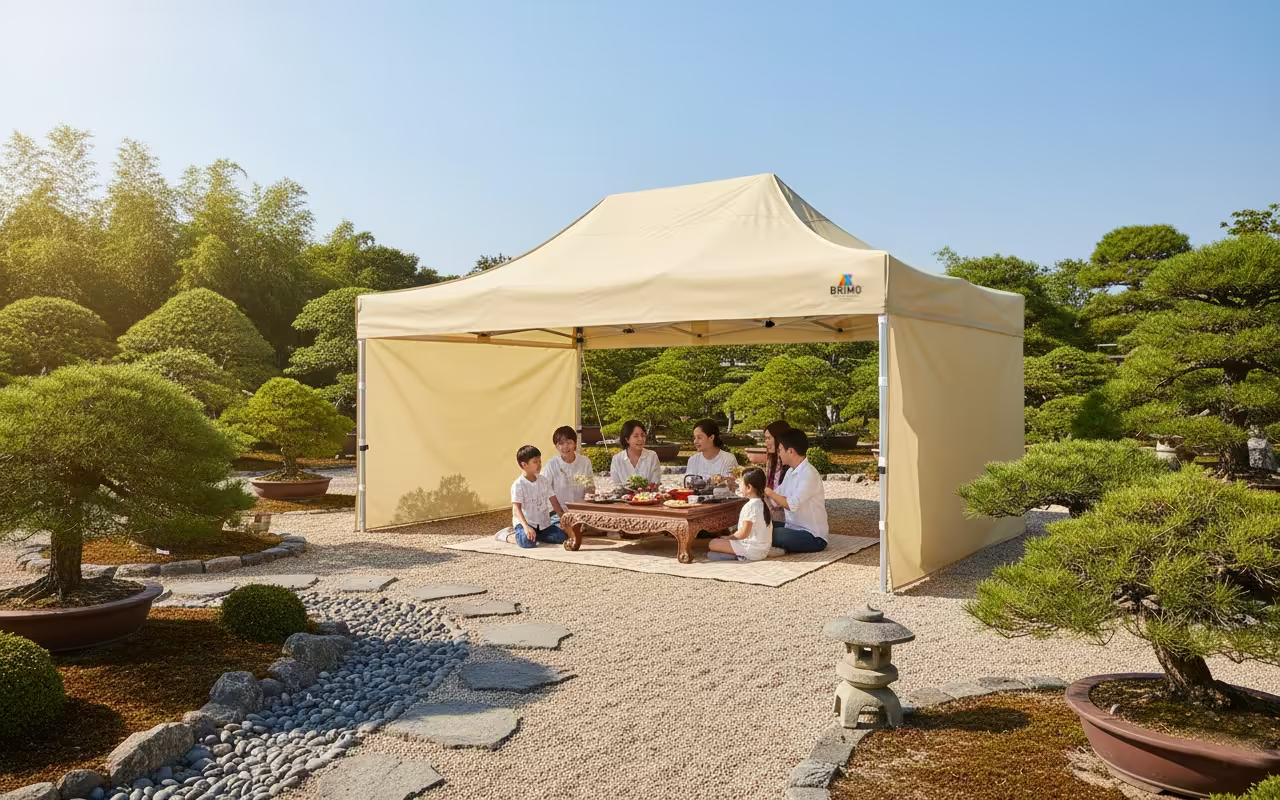
Not All Canvases Are the Same: Polyester or PVC?
When one says "waterproof tent", most people just imagine that it won't rain on them. In reality, however, there are two main camps of materials from which waterproof pop-up garden gazebos are manufactured. The choice between high-grammage Polyester (often referred to as Oxford fabric) and pure PVC (material similar to lorry tarpaulins) fundamentally influences not only the lifespan but also the climate under the gazebo during hot days.
Duel of Materials: Lightness vs Maximum Resistance
While for ordinary family picnics, low weight and easy handling might be the priority, for seasonal use, mechanical resistance is more important. The following table will help you determine which type of canvas is right for your needs.
| Property | Polyester with PVC coating (Oxford) | Pure PVC (Lorry Tarpaulin) |
|---|---|---|
| Canvas Weight | Lighter, more compact, easier to set up | High weight, robust and heavy |
| Thermal Comfort | Breathes better, more pleasant climate in summer | Can accumulate heat (greenhouse effect) |
| Mechanical Resistance | High, but more prone to cuts | Extreme, almost indestructible in normal use |
| Maintenance and Cleaning | Requires gentler cleaning | Possibility to wash with a pressure washer |
Why is Taped Thermo-Tape Important?
Regardless of whether you choose polyester or PVC, the critical point of every tent is the seams. The needle creates thousands of microscopic holes in the fabric during sewing. A quality manufacturer "seals" these places immediately using thermoplastic tape, which is heat-pressed onto the seams from the inside. When buying, always check the gazebo roof from the inside – if you only see threads without tape, the tent will likely leak in the first heavy rain. This is the detail that separates professional solutions from cheap imitations.
Longevity Depends on Your Care
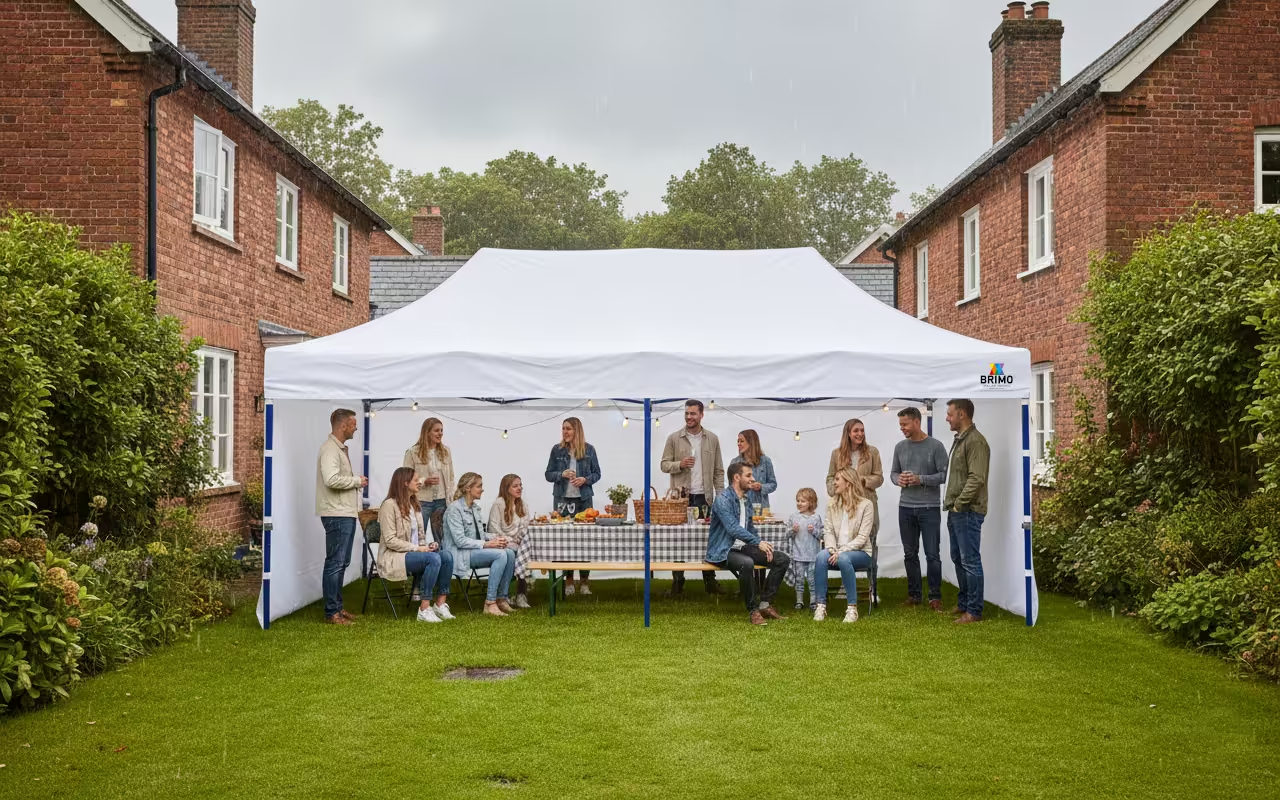
By choosing a quality model of a waterproof pop-up garden gazebo, you have taken the first step. The second is the way you will use it. Even the most resistant steel structure or the thickest polyester canvas has its limits. If you treat your shelter as an investment that protects you and your guests, it will reward you with reliability over many seasons. Remember that the gazebo is not just a passive object, but an active element of your garden architecture.
Questions from Practice: What to Watch Out For?
Besides wind and rain, there are other factors that can influence the functionality of the gazebo. Here are answers to two specific situations that gazebo owners often encounter.
1. Is it safe to barbecue or use heaters under the gazebo?
Although quality canvases are usually treated with a flame-retardant layer, you should never
place a source of open flame directly under the roof or in the immediate vicinity of the side walls.
Radiant heat can irreversibly damage (melt) the internal waterproof layer (PVC/PU coating).
Furthermore, smoke from the barbecue lodges in the pores of the fabric and creates greasy stains that are
very difficult to clean. We recommend barbecuing at a safe distance and using the gazebo
only for dining and serving.
2. Can I wash the roof canvas in the washing machine when it gets dirty?
This is the quickest way to destroy the tent. Machine washing, even on a delicate cycle,
mechanically disrupts the waterproof impregnation, and the tapes on the seams can peel off.
As soon as this layer is damaged, the tent ceases to be waterproof.
Correct cleaning is done by hand – directly on the erected structure,
using lukewarm water, a soft sponge, and ordinary soap (avoid aggressive chemicals).
The water jet from the hose is usually sufficient to remove common dust and pollen.
Written by:
Adam Weber
About the Author
Adam Weber – an expert on mobile shelters and quick-assembly tents, specialising in their use in crisis and medical situations. He developed his knowledge in the field of design during his studies in New York.
He has over 15 years of experience in the design and development of mobile structures. As a design expert, he collaborates with leading European manufacturers to improve aesthetic, safety, and assembly standards.
In his articles, he dedicates himself to the effective use of BRIMO shelters in extreme conditions, their maintenance, and diverse possibilities of use in healthcare, industry, or the municipal sector.