Success at winter markets begins where the influence of the weather ends
The winter trading season is the highlight of the year for many traders. The scent of mulled wine, the lights of Christmas decorations, and crowds of people looking for gifts create a unique atmosphere. However, this idyll clashes with a harsh reality: unpredictable weather. Wind, snow, or sleet can transform a bustling marketplace into a struggle to save goods in a matter of minutes. The difference between a successful day with high turnover and the loss of stock often lies not in the quality of your products, but in the environment you create for your customers.
An investment that protects your profit
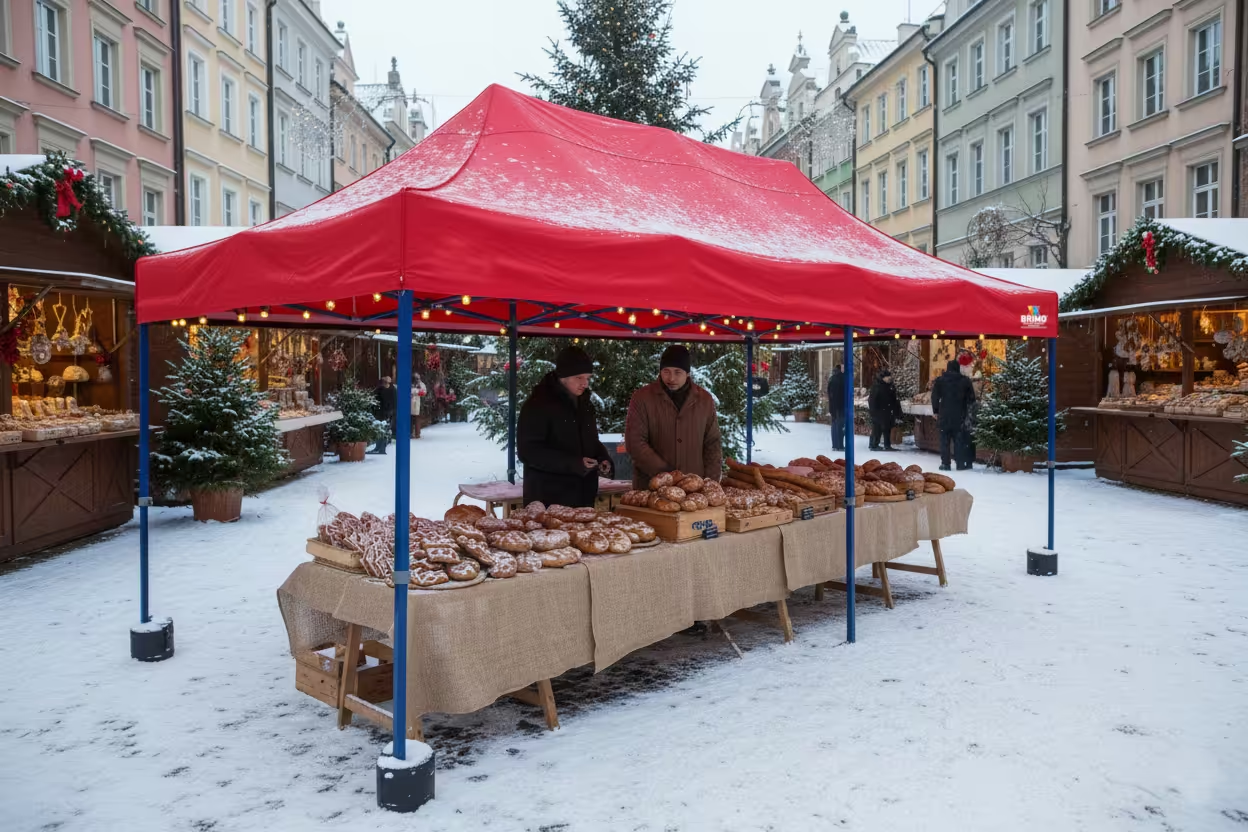
A professional approach to outdoor sales requires more than just a table and a till. In winter, the customer subconsciously looks for places that radiate warmth and safety. A key element of your equipment should therefore be a high-quality waterproof party tent, which serves as the first line of defence against the elements. It is not just about a roof over your head; it is about creating a microclimate where the customer feels comfortable and has time to browse your goods without snow falling down their neck. Durable construction and 100% waterproof sheeting will ensure that your products remain dry and presentable even during the heaviest blizzard.
Why improvisation in winter doesn't work
Many novice traders underestimate the power of winter wind and dampness. Cheap, "hobby" solutions often fail precisely when you need them most, leading to damage to goods and the need to end sales prematurely. A professional waterproof marquee with sidewalls not only protects the range but also allows for effective heating of the space, which is an invaluable benefit in freezing conditions for you and your customers. Preparedness for the whims of the weather is a sign of professionalism that builds trust and directly increases turnover.
Key parameters for winter sales: What distinguishes a professional?
When choosing equipment for winter markets, it is necessary to realise that conditions are diametrically opposite to summer festivals. Low temperatures change the properties of materials – cheap PVC becomes brittle and cracks, while thin aluminium profiles can deform irreversibly under the weight of wet snow. A professional trader, therefore, does not just look for a "roof", but a complex system that withstands dynamic wind loading and keeps the heat inside.
Hobby solution vs. Professional Winter Standard
The difference between success and disaster often lies in the details of the construction. The following table clearly shows why investing in quality equipment pays off in the long run and how an ordinary supermarket gazebo differs from a specialised solution, such as a waterproof party tent intended for demanding conditions.
| Parameter | Ordinary "Hobby" Gazebo | Professional Waterproof Tent |
|---|---|---|
| Construction material | Thin-walled aluminium or plastic joints (prone to snapping in frost) | Reinforced steel or thick-walled anodised aluminium with screw joints |
| Roof sheeting | Thin polyester without taping (leaks after 30 minutes) | High-weight Oxford fabric with PVC layer, 100% waterproof |
| Thermal comfort | Open space, heat loss, draught | Possibility of hermetic sealing with 4 walls with velcro |
| Wind stability | Low (risk of tipping over at gusts above 15 km/h) | High (up to 60-70 km/h with correct anchoring) |
How to keep the heat and the customer
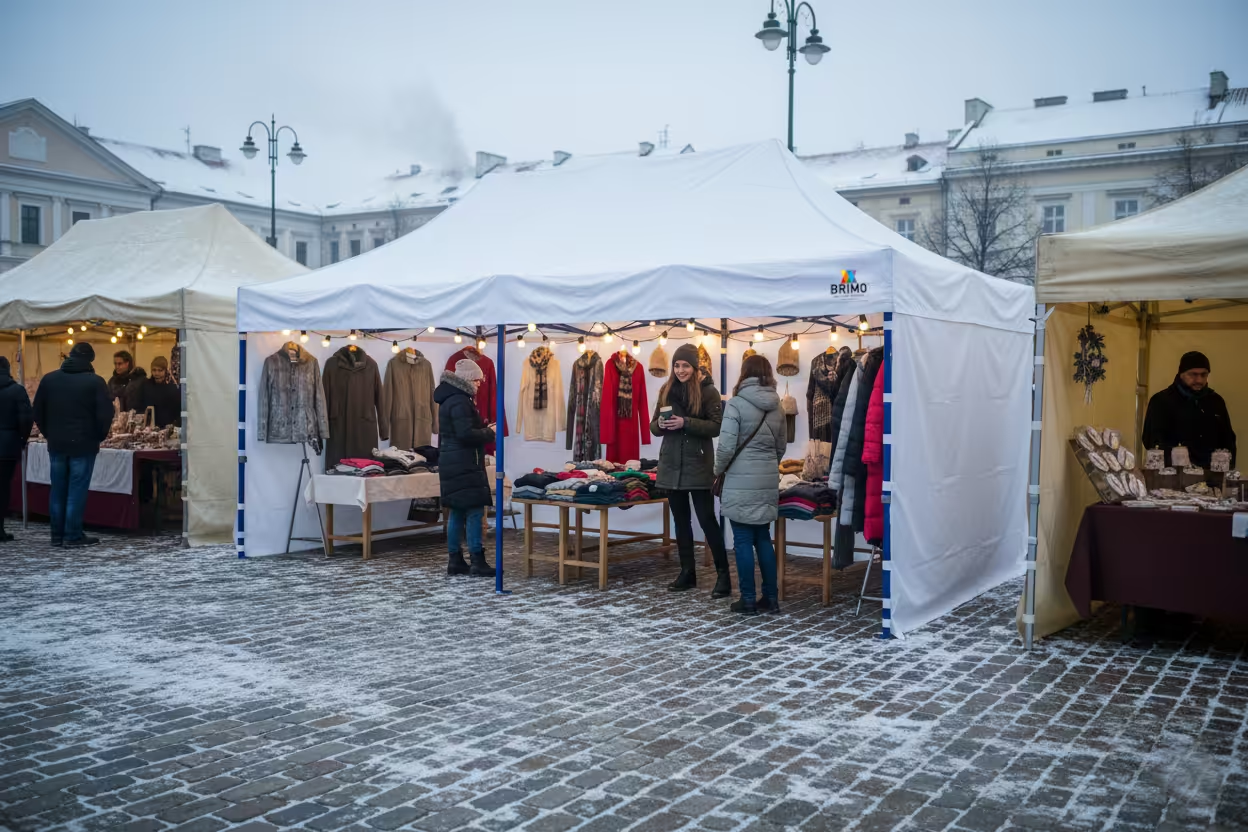
A high-quality waterproof tent is the basis, but for maximum effect, you must use it correctly. In the winter months, we recommend installing at least three sidewalls, but ideally all four with a created entrance. This eliminates the "chimney effect", where the draught carries all the heat away. If you place a gas or infrared heater in such an enclosed space, the temperature inside can be up to 10°C higher than outside. A customer who can take off their gloves and browse the goods in peace will buy with much greater probability than one who is shivering with cold.
Winter favours the prepared: Your stall is your calling card
In conclusion, it can be said that success at Christmas markets or winter festivals is not a question of luck with the weather, but a question of independence from it. While the competition struggles with blown-away goods or a leaking roof, you can concentrate on the essential – on sales and building a relationship with the customer. The investment in professional equipment will pay you back not only in the form of protected goods but above all in the form of higher credibility. Quality waterproof party tents are not just an expense; they are strategic business partners that allow you to operate at full throttle, regardless of whether it is snowing, raining, or freezing outside. Leave the weather outside the door this year and create an oasis for your visitors that they will gladly return to.
Two frequent questions that trouble traders in winter
1. How to prevent water condensation on the roof when heating?
This is a frequent physical phenomenon in cold weather. If you heat intensively in a closed tent (especially with gas heaters that produce water vapour) and it is freezing outside, moisture condenses on the inner side of the cold roof sheeting. The solution is to ensure air microcirculation. Even if you have the party tent hermetically sealed, leave a small slit for ventilation in the upper part of the sidewalls. Using electric infrared heaters instead of gas "mushrooms" also significantly reduces air humidity inside the stall.
2. What to do with the tent if it is wet and dirty from road salt after the event?
The biggest enemy of tents is not winter itself, but incorrect storage after it. If you have to pack the tent wet, it is critically important to unfold it again within 24 hours in a dry environment (e.g., in a garage or warehouse) and let it dry completely. Winter slush often contains aggressive road salt, which can damage the fabric impregnation and metal parts of the construction. Before final storage, rinse the sheets with clean lukewarm water to wash off the salt and let them dry 100%. You will thus prevent the formation of mould and weakening of the material, thanks to which the tent will serve you for many years like new.
Written by:
Lukas Takumi
About the author of the article
Lukas Takumi – a specialist in innovations and the implementation of new technologies in portable structures and tent systems, with more than 10 years of experience in the field of mobile solutions for events and industrial applications.
He studied the implementation of the latest technologies at the University of Tokyo and participates in the collaboration with the company BRIMO in the design and verification of innovative tents that guarantee safety, rapid assembly, and durability of materials.
His contributions focus on practical advice on the selection, maintenance, and safe use of party tents and the integration of innovative solutions into daily operation.