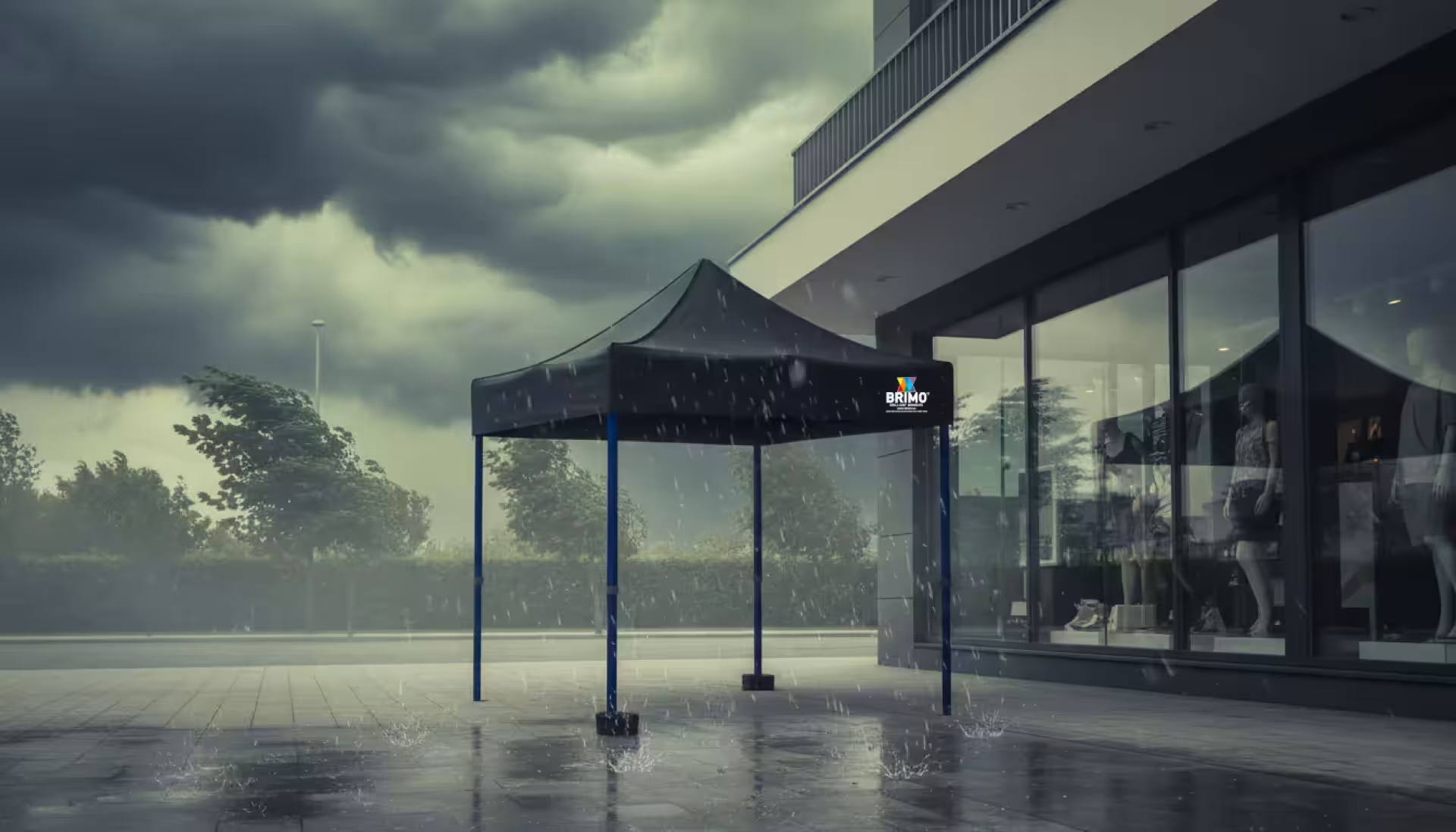
Revolution in Mobile Shelter: Why Bet on Steel Security?
Organising outdoor events, whether it's a family celebration in the garden or a professional event, brings one fundamental unknown – the weather. In moments when sunbeams turn into an unexpected downpour within minutes, reaction speed is key. This is exactly where pop-up steel gazebos prove to be an irreplaceable partner. It's not just a simple shelter; it's a sophisticated solution that combines the robustness of traditional structures with unrivalled mobility.
When Durability Meets Flexibility
There are many materials on the market, but steel still holds its privileged position. Why? Because in stronger winds or more demanding conditions, the weight and strength of the structure are your only insurance. Unlike lightweight aluminium alloys, which aim primarily for low weight, steel profiles provide the necessary centre of gravity and stability. Moreover, modern surface treatment technologies have eliminated the age-old threats of corrosion, making these gazebos a long-term investment, not just a seasonal affair.
More Than Just Rain Protection
A quality scissor gazebo doesn't just fulfill the function of an "umbrella". It creates a defined space that optically and functionally elevates the level of any event. Whether you need space for catering, a presentation stand, or a safe shelter for equipment, the steel structure will handle the load of frequent assembly and dismantling without loss of functionality. In the following lines, we will look at how to choose the right model and how to get the most out of it without unnecessary effort.
More Privacy, Less Wind: How to "Dress" the Structure Correctly?
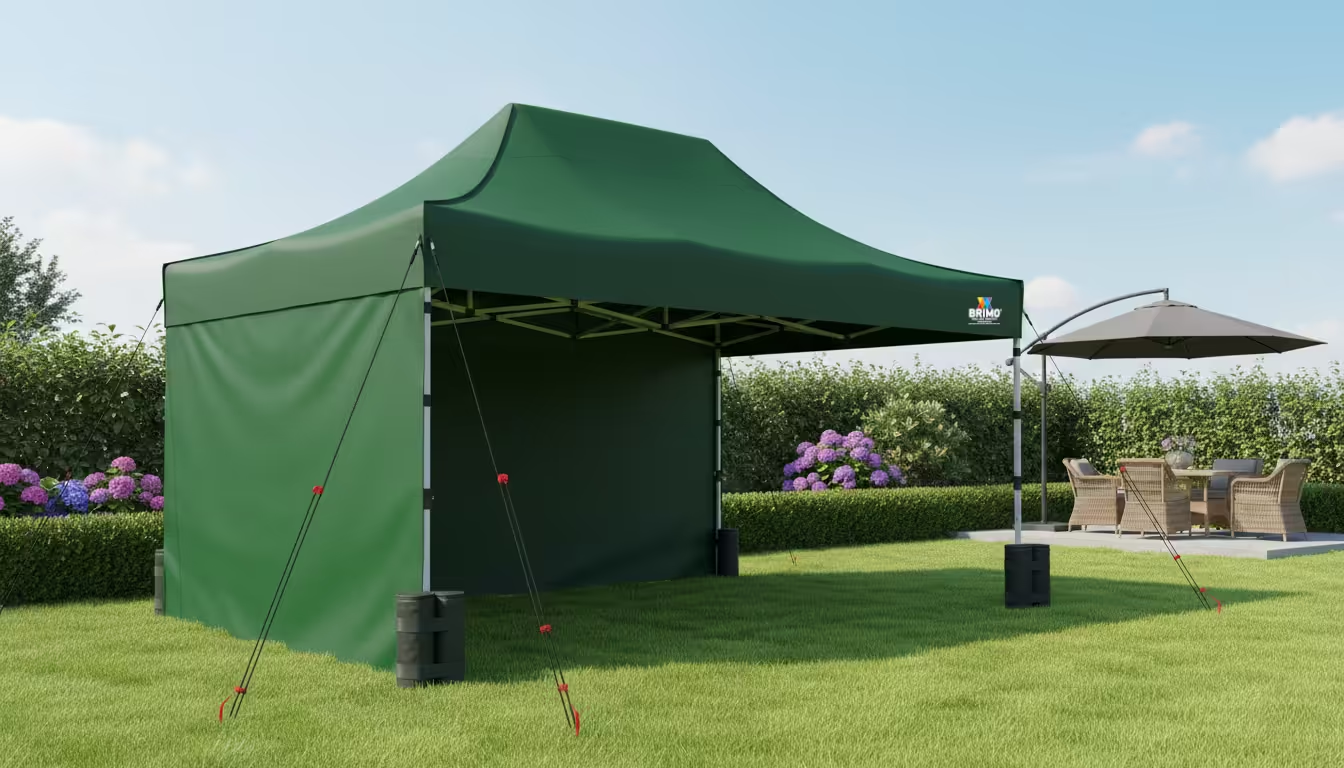
The roof itself will protect you from the midday sun or vertical rain, but real comfort only begins with the addition of sidewalls. The Brimo steel express gazebo is designed as a modular system. This means you don't have to keep the gazebo constantly closed like a "box". You can combine different types of walls depending on whether you want to create a showcase for customers or a hermetically sealed warehouse protected from the eyes of passers-by.
Choosing the right combination of cladding can dramatically change the functionality of the entire shelter. Look at the differences between individual wall types:
| Wall Type | Main Function | Ideal Use |
|---|---|---|
| Full Wall | Maximum privacy and shade, protection of goods. | Warehouses, staff area, changing rooms. |
| Window Wall | Interior lighting without draughts. | Garden parties, dining areas (looks more aesthetic). |
| Door Wall | Comfortable entrance (zips) without dismantling needs. | Main entrance to a closed stand. |
| Half Wall | Counter sales – separates customer from seller. | Sales stalls, food distribution, info points. |
Fastening System: The Detail That Decides Warmth
Many cheap gazebos use only a few plastic hooks or strings to fasten walls. Result? At the first wind, the walls flap and the wind blows inside. The professional solution uses velcro around the entire perimeter. This system not only speeds up assembly (you simply "stick" the wall to the roof), but above all seals the space.
Thanks to velcro along the entire length of the roof and vertical zips at the corners of the walls, you can close the gazebo almost hermetically. This is invaluable in colder weather – if you place a patio heater inside, heat doesn't escape through cracks and you'll maintain a pleasant climate in the gazebo even during a damp autumn.
Beware of the "Sail Effect"
Although walls increase comfort, one must think about physics. By completely closing the gazebo, you create a large surface into which the wind can push. Professionally, this is called the sail effect. If you expect strong gusty wind, it is paradoxically safer to remove some walls so that the air has somewhere to circulate (reducing resistance), or anchor the gazebo even more thoroughly. The steel structure can withstand a lot, but the laws of physics apply to everyone equally.
Two Maintenance Questions That Will Save You Money
1. Can I leave the steel gazebo up in winter too?
This is a risky area. The steel structure itself handles cold excellently – unlike some plastic composites, it doesn't become brittle in frost. However, the problem is snow load. No scissor gazebo (not even the most expensive one) is dimensioned to carry tens of kilos of wet snow. If you plan winter use (e.g., Christmas markets), you must regularly sweep snow off the gazebo and ensure heating so that snow on the roof melts. If you leave it unattended during a snowstorm, you risk overloading and roof collapse.
2. Can I clean the covers with a pressure washer?
Although it is tempting and fast, we do not recommend it. A water jet that is too strong can damage the microscopic impregnation layer or tear the PVC coating on the inner side of the fabric. Thus, the gazebo would lose its waterproofness. The best way of maintenance is lukewarm water, ordinary soap (no aggressive chemicals), and a soft sponge. It is crucial to let the covers dry perfectly before packing – this prevents mould formation and unpleasant odours after opening in the next season.
Final Summary: Why Is Steel the Choice of Reason?
The world of portable shelters is full of compromises. Aluminium is light but expensive. Cheap tubular structures are cheap but unstable. Pop-up steel gazebos occupy a unique place on the market – they offer professional durability at a price that won't ruin the budget of an ordinary family or a starting entrepreneur.
Whether you are looking for a solution that you will set up in 60 seconds, that will protect you from a summer storm, and that thanks to its weight will remain standing where you put it, steel is the right way. Do not forget, however, that a gazebo is only as good as the care you dedicate to it. With correct anchoring and maintenance, it will become a companion you can rely on for years.
Written by:
Alex Martin
About the Article Author
Alex Martin – expert in portable structures and tent systems with more than 10 years of experience in the field of mobile solutions for events and industrial applications.
He graduated in Civil Engineering at the Technical University in London and cooperates long-term with the brand BRIMO in the development and testing of products that combine safety, fast assembly, and material durability.
His contributions focus on practical advice on the selection, maintenance, and safe use of scissor gazebos.