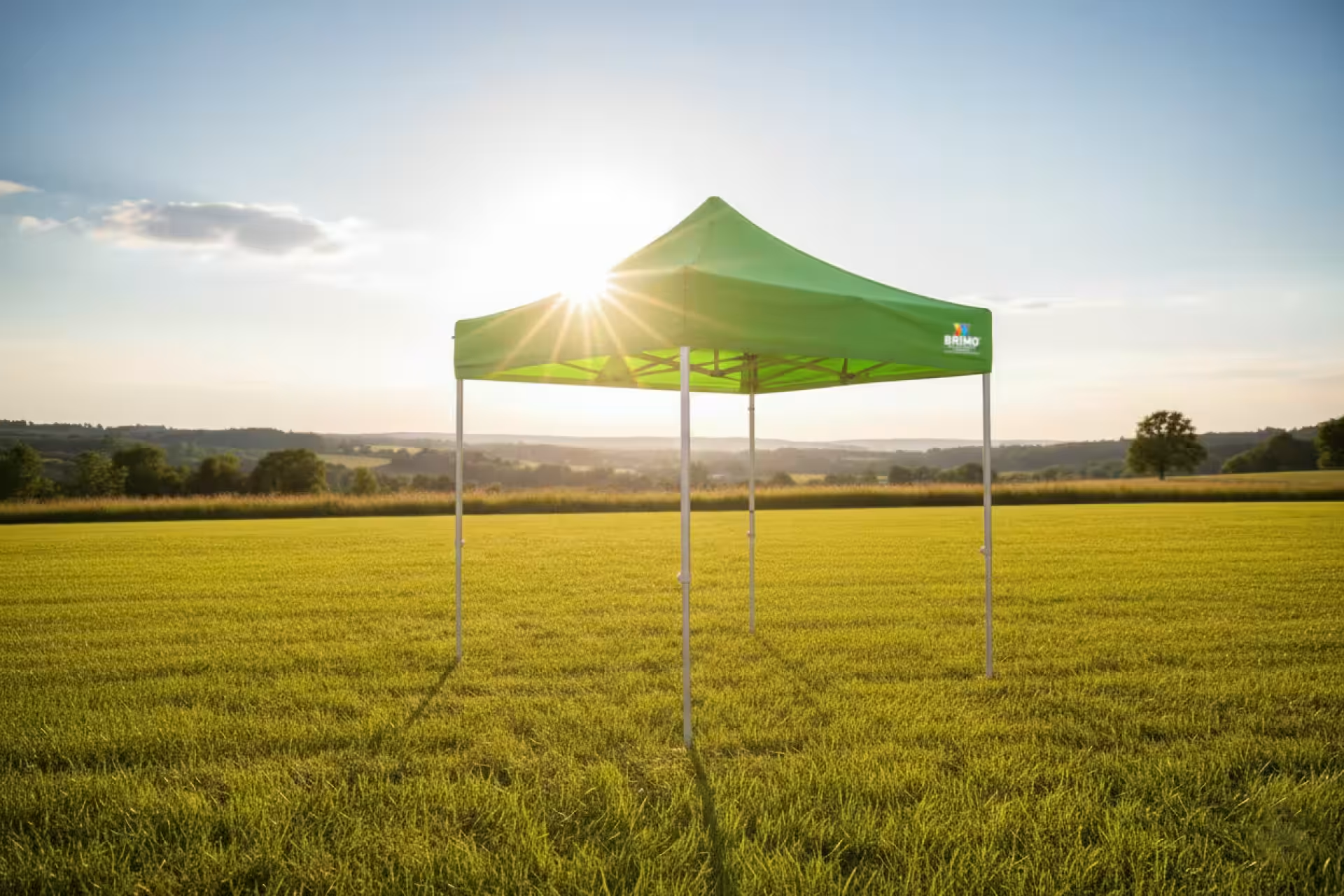
The key to the longevity of your shelter: How to choose the right replacement roof?
An investment in quality that protects your business and your leisure
Every owner of a mobile shelter knows that the fabric is the most stressed part. Whether it is the long-term effect of aggressive UV radiation, strong gusty wind, or normal mechanical wear during frequent folding, sooner or later the time will come when a replacement roof for the gazebo will be a necessity. The selection of this component should not be rushed. Many users underestimate the fact that the roof is the most important barrier separating you, your guests, and your goods from adverse weather.
A quality replacement roof for a gazebo is not just an ordinary piece of cloth. It is a sophisticated product with precisely defined technical parameters, such as high fibre density, resistant water column, and tensile strength. Cheap alternatives on the market often fail precisely at critical moments – during heavy summer rain, when they leak through poor-quality seams, or in the wind, when they tear at the attachment points.
Why does a universal replacement roof for gazebos not exist?
Technical differences you don't see with the naked eye
The biggest and most expensive myth in the field of pop-up gazebos is the belief that the dimension "3x3 metres" is identical across all manufacturers. However, the reality is that every replacement roof is sewn exactly to measure for a specific structure. A difference of just 3 centimetres in the height of the centre pole (peak) or in the width of the profiles can cause the canopy on a foreign frame to be either dangerously over-tensioned, leading to immediate tearing, or conversely, too loose.
If the replacement roof does not sit on the structure with millimetre precision, it loses its key hydrophobic properties. On insufficiently tensioned fabric, heavy "pockets" of water form during rain, which with their weight can irreversibly deform the entire steel or aluminium structure. That is why at BRIMO we constantly emphasize: compatibility is more important than price. In the following lines, we will look in detail at why it is not worth risking with non-original parts and how to recognise that it is time for a replacement.
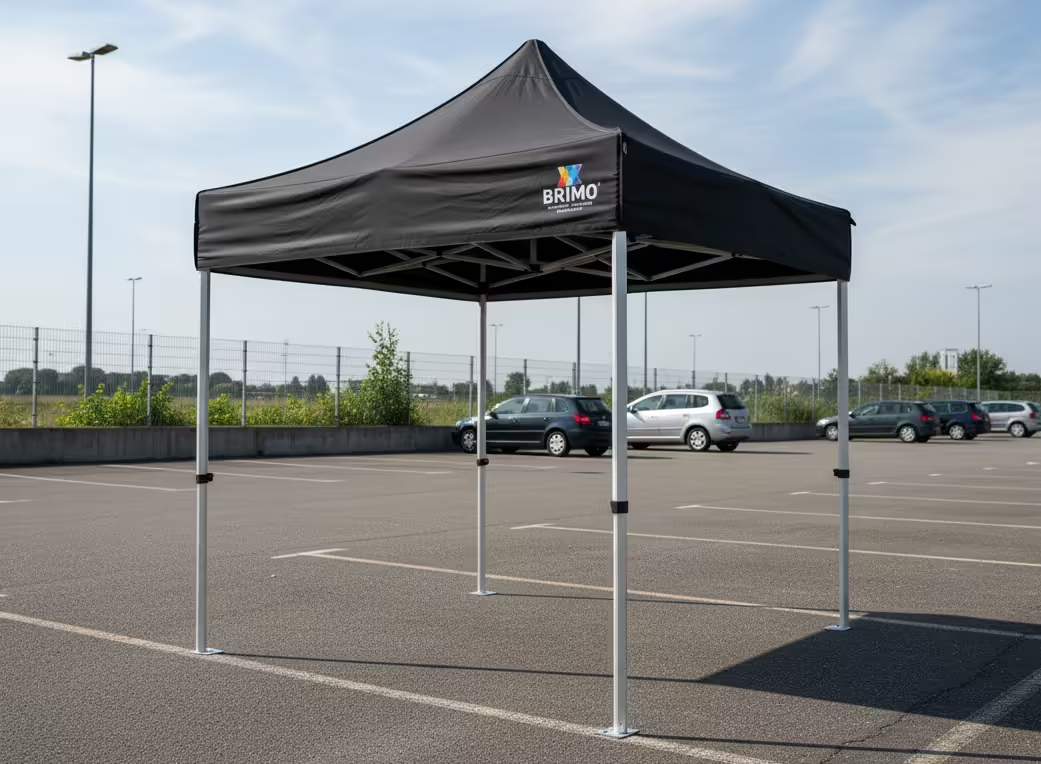
The hidden mathematics of gazebos: When 3 metres are not 3 metres
Why millimetre deviations decide the lifespan of the canopy
When choosing a replacement roof, most customers are guided by the nominal dimension, for example 3x3 m. However, from our 15 years of experience, we know that reality is different. The European market is flooded with structures from dozens of manufacturers and each of them uses a different profiling. While one frame has an outer dimension of exactly 298 cm, another can be 302 cm. This difference of 4 cm might seem negligible, but for rigidly sewn fabric, it is fatal.
If you try to stretch a replacement roof that is 2% smaller than the perimeter of your structure, extreme tension is created in the corners. The fabric, even if it is of high quality, has its physical limits. The result is either the bursting of seams already during the first setup or damage to the Velcro fasteners, which will not align with the counterparts on the frame. Conversely, if the canopy is even 5 cm looser, a water pocket with a volume of even 20-30 litres will immediately form in it during rain, which can break the scissor crosses with its weight.
The risk of the centre pole height
A detail that turns functionality into a catastrophe
An even more critical parameter, which is often forgotten, is the height of the centre pole (peak). This dimension determines the slope of the roof and its tension. If your structure has a peak 100 cm high, but the purchased replacement roof is sewn for a height of 85 cm, the fabric simply will not reach the corners of the frame.
In the opposite case, if the replacement roof is dimensioned for a higher structure than you have, the fabric will "float" on the roof. Air pockets during wind will cause constant flapping of the material, which leads to degradation of the coating and loss of waterproofness more than 40% faster than with a properly tensioned canopy.
Compatibility comparison: Original vs. Universal
What do you risk by using the wrong roof?
| Parameter | Original BRIMO roof on BRIMO frame | Wrong / Universal roof on foreign frame |
|---|---|---|
| Fabric tension | Optimal (like a drum), water drains immediately. | Loose folds or extreme tension in the corners. |
| Rain resistance | 100% waterproofness, no water accumulation. | Formation of water pockets (risk of collapse within 15 mins of heavy rain). |
| Fastening (Velcro) | Match exactly with the structure (deviation max 2 mm). | Shift of 5-10 cm makes safe anchoring impossible. |
| Aesthetic impression | Professional appearance, smooth surface. | Wrinkled fabric, visually looks "borrowed". |
As you can see from the table, the replacement roof for the gazebo is not just an aesthetic accessory. It is a functional shield. The investment in an original part, which is precisely calibrated for your structure, will pay you back not only in lifespan (which with correct use is up to 3 times longer) but above all in the peace of mind that your pop-up gazebo will withstand even a sudden change in weather.
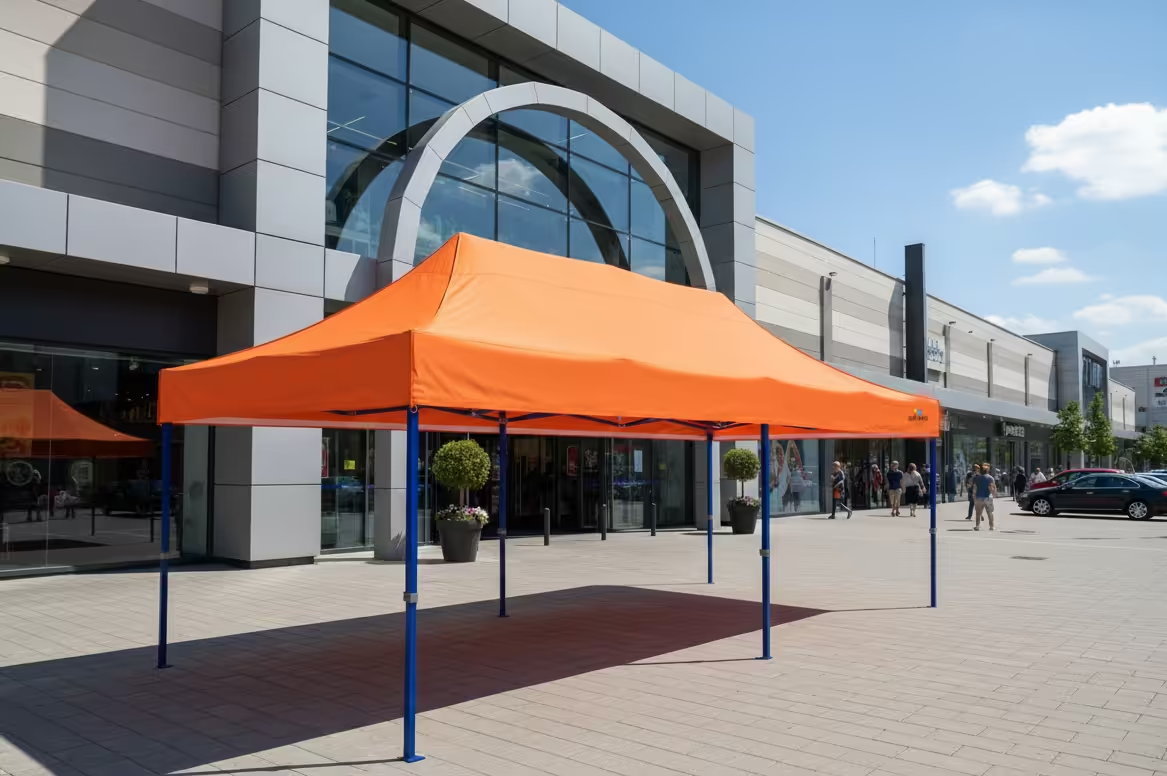
A decision that saves money and nerves
Do not risk the safety of guests by experimenting
In conclusion, it is important to realise that the replacement roof is not only an aesthetic accessory but a key element of the stability of the entire shelter. Attempts to save by purchasing a cheaper, "universal" canopy for an unknown structure end in 9 out of 10 cases in disappointment – either by immediate damage during assembly or by leaking during the first storm.
At BRIMO, we believe in honesty. If we know that our replacement roof will not work 100% on your structure, we prefer not to sell it to you. Our goal is your long-term satisfaction, not a one-time profit. If you own a BRIMO structure, the original part guarantees you that the gazebo will look and serve like new again. If you have another brand, be prudent in your choice and always consult on compatibility.
Frequently asked questions before purchase
1. Can a larger replacement roof be adapted at a tailor?
We strongly advise against this procedure. The replacement roof for the gazebo is made of special polyester fabric with PVC coating. Any additional sewing into the finished canopy damages its impregnation. The needle creates thousands of microscopic holes that will no longer be factory-taped. The result will be that the roof, although fitting dimensionally, will let rain through the seams. It is similar to wanting to shorten an umbrella with scissors – the functionality will be irretrievably lost.
2. What if I don't know the brand of my structure?
Many customers inherit the gazebo or lose the purchase receipt. In such a case, the best solution is to photograph the detail of the corner joint and the centre cross of the structure. Our team of experts can often determine the type of profile just from the photo. If it is a standard dimension, we can advise you whether it makes sense to risk buying a new canopy or if it is economically more advantageous to invest in a completely new set, where you have the guarantee that the replacement roof will always be available in the future.
Thank you for your trust, and we wish you many successful events under a safe roof.
Written by:
Adam Weber
About the author of the article
Adam Weber – expert on pop-up gazebos BRIMO and their technical properties. He helps customers understand the differences between structures and choose the right solution.
He has more than 15 years of experience in the field of mobile structure development and regularly publishes specialised articles on technical parameters of tents and canopies.
His goal is for every customer to choose a roof that will fit reliably and last for many years.