The Garden as an Extension of the Living Room: The Psychology of Modern Relaxation
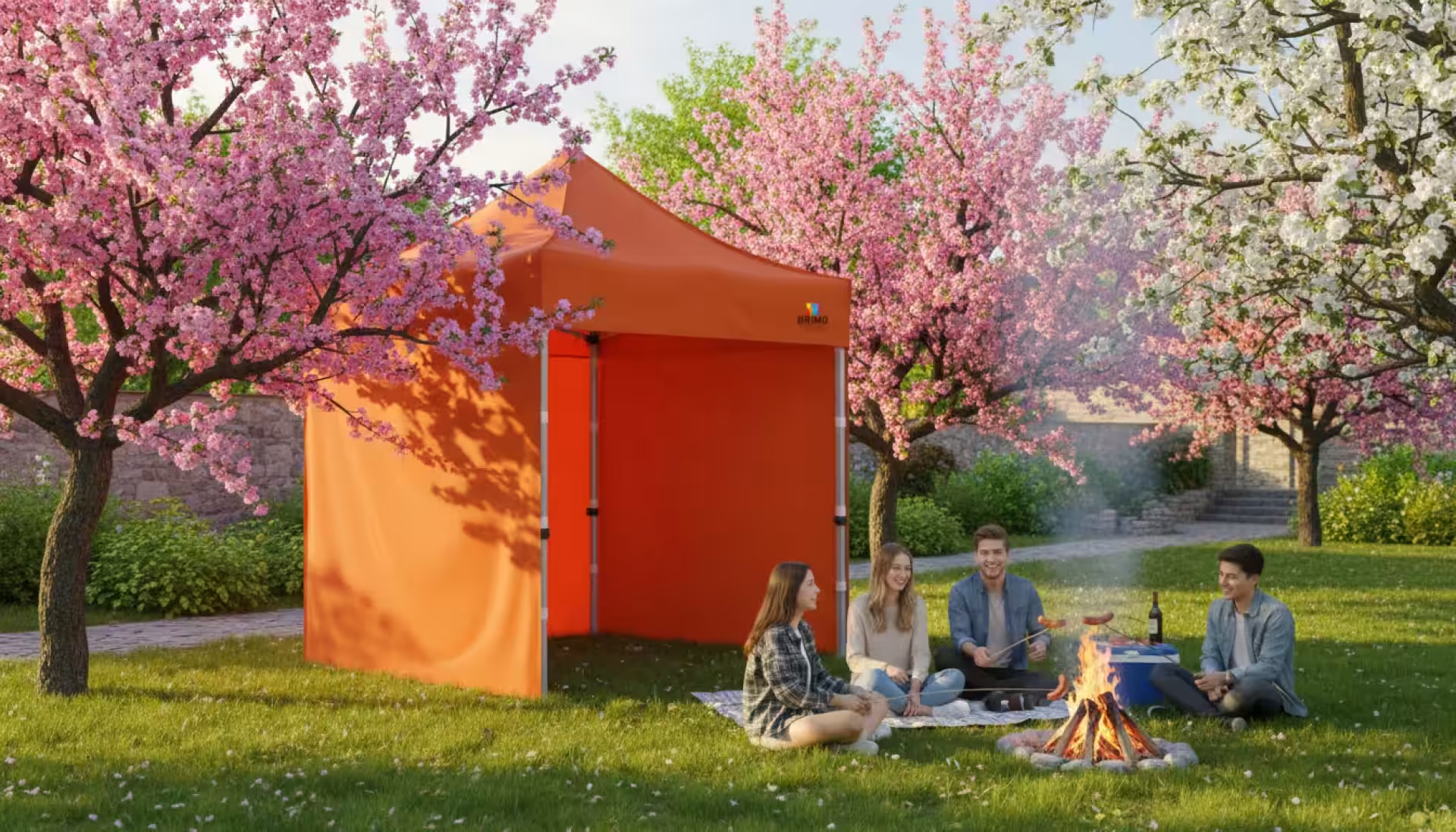
In today's hurried times, the garden is no longer perceived merely as a space for growing crops or necessary lawn maintenance. It is transforming into a key zone of mental hygiene, where we seek an escape from digital smog and work stress. The concept of "outdoor living" is not just a fashion trend, but an answer to our natural need for biocoexistence. However, creating a functional exterior that provides the same comfort as the interior of the house requires more than just garden furniture – it requires strategic planning of a space that will serve in any weather.
When Architecture is Replaced by Flexibility
The key to using the garden from early spring to late autumn is the elimination of weather influences without the need for complex construction works. This is precisely where professional pop-up garden gazebos play an irreplaceable role, defining the space and providing immediate protection. It is not just about a simple roof, but about creating a stable shelter that protects against UV radiation and unexpected summer storms. Thanks to this, your patio or lawn transforms into a fully-fledged outdoor office, dining room, or meditation corner, ready for use within a few minutes.
Investment in Time and Well-being
The true value of a modern garden lies not in expensive plants, but in the time we can realistically and qualitatively spend in it. Effective rest requires a sense of privacy and safety. Suitably chosen shading works as a visual and psychological barrier that delineates a space for peace. In the following lines, we will look at how technical innovations in the field of portable structures are changing the rules of the game and allowing garden space to be designed without compromises between aesthetics and functionality.
Visual Psychology: How Colours Influence Thermoregulation and Mood
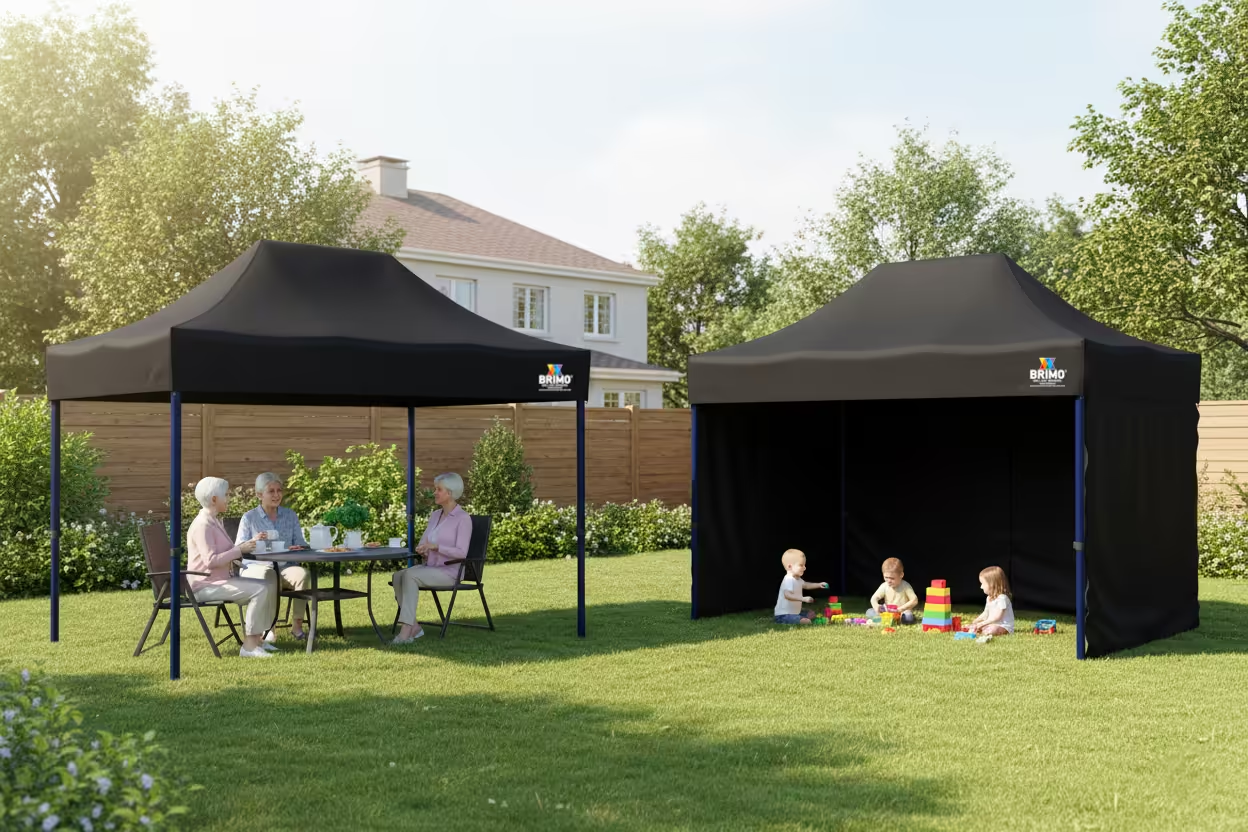
When choosing outdoor shading, we often underestimate the influence of colour on overall bioclimatic comfort. It is not just about aesthetic matching with the façade of the house, but about the physical properties of the material. Light shades, such as cream or white, work on the principle of high albedo – they reflect most solar radiation, thus maintaining a noticeably lower temperature under the roof. They are ideal for midday relaxation and a "clean" mind. Conversely, darker colours absorb more light, reduce glare (which you will appreciate when working on a laptop), and give the space a touch of exclusivity and intimacy.
Privacy on Demand: The Fight Against Visual Smog
Modern housing often does not provide sufficient isolation from neighbours or the street. This is precisely where the greatest strength of variable side walls manifests itself. They allow creating a visual barrier exactly in the direction from which disturbing influences come, while the other sides remain open to the greenery. This sense of controlled privacy is key to deep psychohygiene – the human brain can fully relax only in an environment where it does not feel watched.
Zoning of Space: Architecture Without Walls
A large, open lawn area can seem chaotic and uninviting. The principle of successful "garden design" lies in dividing the space into functional zones. Just as indoors we have a kitchen, living room, and bedroom, the garden also needs its defined circles. The mobile gazebo serves as a central anchor point – it defines the space "here we rest" or "here we eat". With this simple optical trick, you bring order and harmony to the exterior, which subconsciously acts soothingly.
Flexibility for Any Social Event
Static gazebos have one fundamental flaw – they are unchangeable. However, if you are planning a larger family celebration, you need to open up the space. If you long for a romantic dinner for two, you need to close it. The ability to adapt the size and openness of the covered space to the current number of people and the type of event is what distinguishes modern smart solutions from outdated wooden structures. Your garden is thus not a preserved open-air museum, but a living organism that grows and changes along with your needs.
Conclusion: The Garden of the Future is About Experiences, Not Work
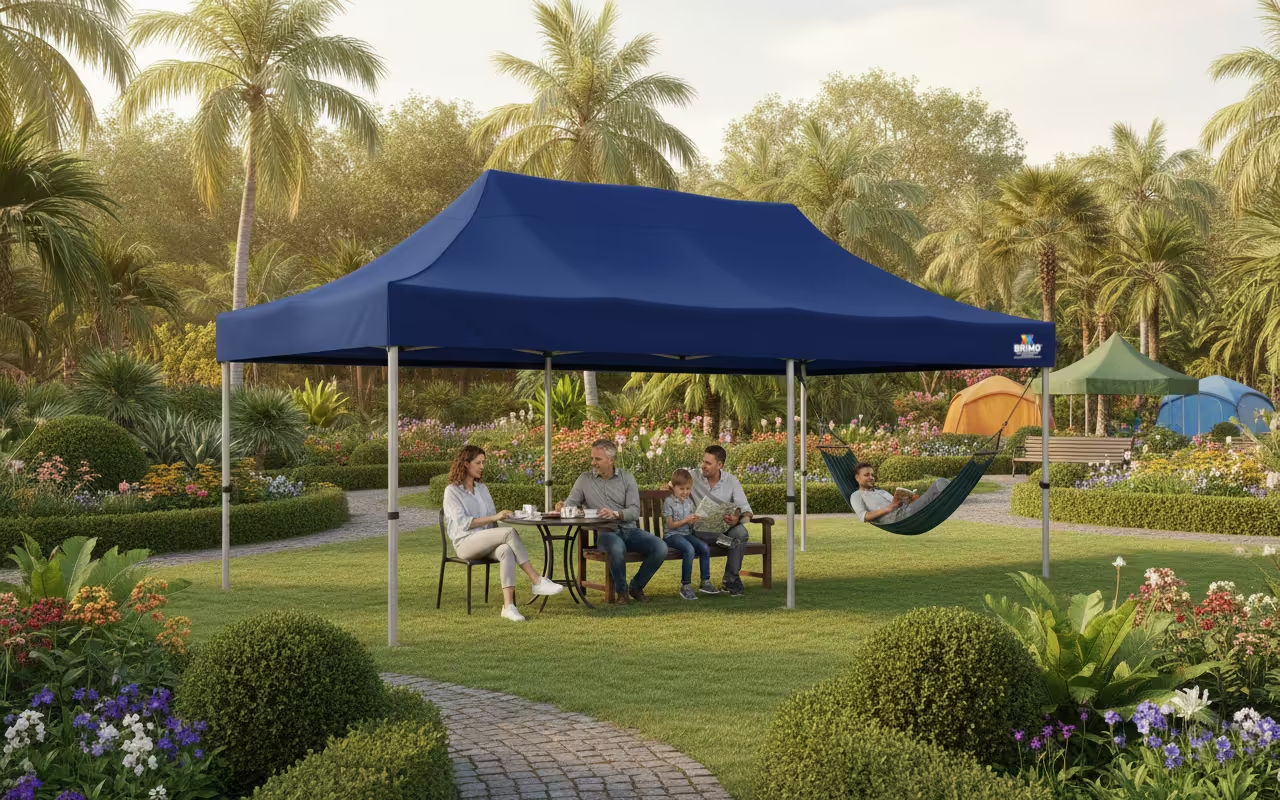
The transformation of the garden into a fully-fledged living space is not a question of trends, but of lifestyle, which prioritises mental health and quality time spent with loved ones. Let's stop waiting for the "perfect weather". With modern shading technologies, we create the ideal conditions ourselves. The investment in a professional pop-up garden gazebo is ultimately an investment in ourselves – in moments of peace that we will not let be taken away by rain or harsh sun. Create a space for yourself where you will feel free.
Expert Advice: What You Ask Most Often
1. Is a mobile gazebo really safe even in stronger winds?
Safety is directly proportional to the quality of the construction and correct anchoring. While cheap hobby tents pose a risk even in a light breeze, professional all-steel or aluminium models are dimensioned for loads up to a certain wind force (often up to 40-60 km/h, depending on the model). The key is "active anchoring". Using weight bags with sand or ribbed steel pegs in the lawn is a necessity. However, in extreme weather warnings and storms, the golden rule of physics applies: the safest tent is the one that is folded. Thanks to the scissor system, this takes less than a minute, which is a huge advantage over static pergolas, which can suffer fatal damage.
2. Can I leave the fabric gazebo up all year round?
Although materials like polyester with a PVC layer are highly resistant and the structures rust-proof (especially anodised aluminium), leaving the tent out all year round without supervision is not recommended, especially in our latitudes. The biggest enemy is not frost, but the weight of wet snow. The roof canvas is not designed to carry tens of kilograms of snow, which could lead to deformation of the scissor crosses. For maximum service life, I recommend using the tent in the spring-autumn season and storing it in a dry state during the winter, or possibly using it in winter only occasionally (e.g., during Christmas markets in the garden) and folding it up after the event.
Written by:
Lukas Takumi
About the Author
Lukas Takumi – specialist in innovations and implementation of new technologies in portable structures and tent systems, with more than 10 years of experience in the field of mobile solutions for events and industrial applications.
He studied the implementation of the latest technologies at the University of Tokyo and participates in collaboration with the company BRIMO in the design and verification of innovative tents that guarantee safety, rapid assembly, and durability of materials.
His contributions focus on practical advice on the choice, maintenance, and safe use of pop-up tents and the integration of innovative solutions into daily operation.