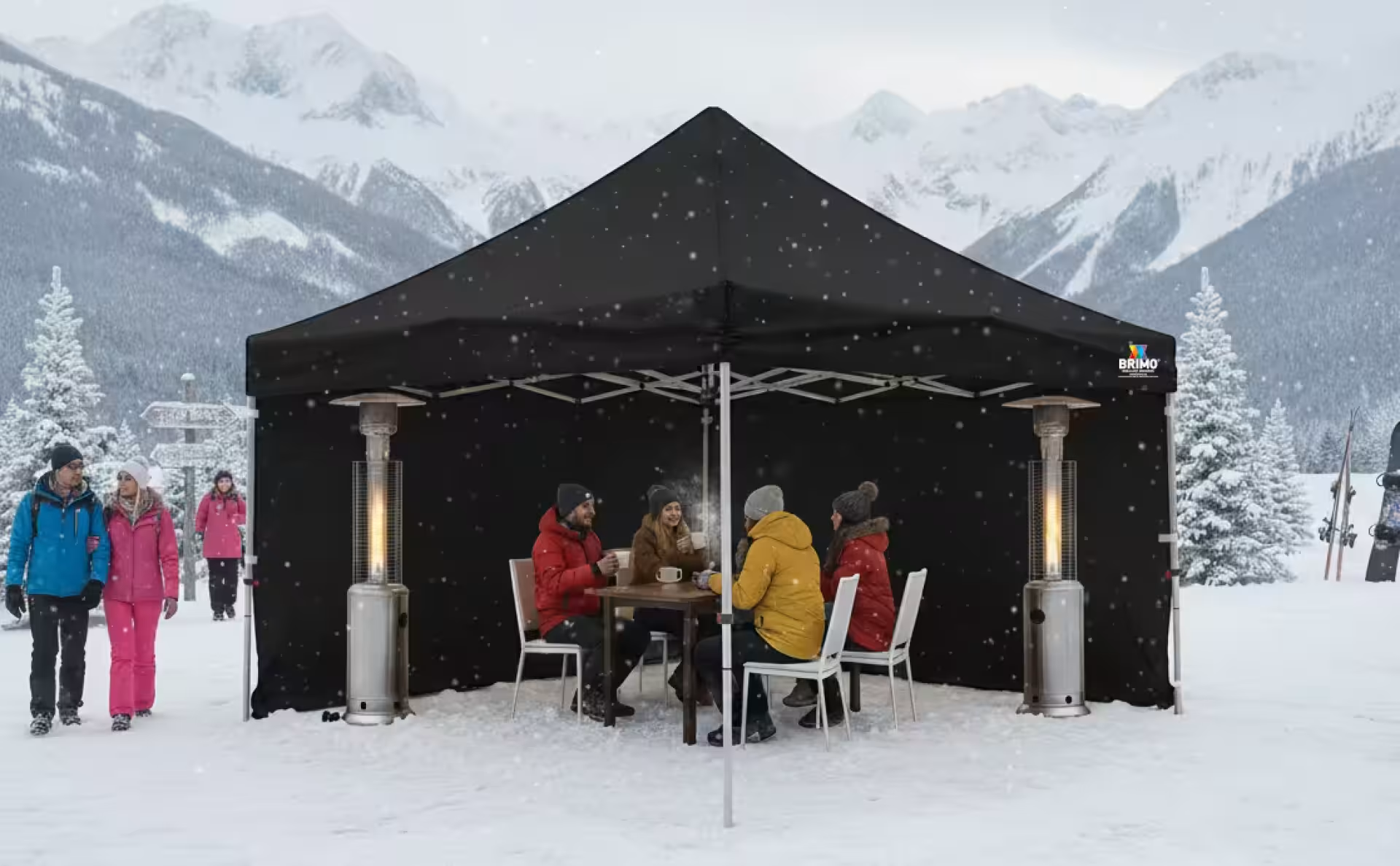
Gas Patio Heater: Your Key to Year-Round Comfort on the Terrace and in the Garden
The arrival of colder days and damp evenings often signals the end of the season for our terraces, balconies, or garden gatherings. Many of us retreat indoors with a heavy heart, even though we would love to spend more time in the fresh air. The solution, however, is simpler and more accessible than it might seem. A high-quality gas patio heater can transform a cold outdoor space into a pleasant oasis of warmth, where you can enjoy your morning coffee or an evening get-together with friends without needing to wear several layers of clothing. In this article, we will look at why this technology is becoming an indispensable part of modern households and event spaces.
Why Invest in Gas Patio Heaters?
The main advantage of gas patio heaters is their independence from the electrical grid and high mobility. Unlike static solutions, you can place a mobile heater exactly where you need it most – whether by the dining table, the lounge set, or under a pop-up gazebo. Thanks to modern combustion technologies, efficient heat emission occurs, which warms not only the air (convection) but directly the people and objects within its range (radiation). With a gas heater, you gain immediate thermal comfort without a long wait for the space to warm up.
Critical Detail for Winter: Propane vs. Butane
Many users make a fundamental mistake by using the classic propane-butane mix during the winter months. It is important to know that butane stops evaporating at temperatures around 0 °C. The result is that unused gas remains in the bottle and the burner goes out, even though the bottle is not empty. For garden use in winter, we therefore unequivocally recommend pure propane. This evaporates down to -42 °C, burns cleaner, and has a higher calorific value, which guarantees stable performance of the heater even during frosty evenings.
Efficiency and Atmosphere in One
Besides the practical side, we must not forget the aesthetic contribution. The sight of the flame (in models with a visible fire) gives the space an unrepeatable atmosphere and a sense of cosiness that electric infrared heaters can hardly imitate. When choosing the right model, however, it is important to understand the parameters. Whether you decide to prioritise a standing gas patio heater in a mushroom shape (higher heat output downwards) or a design pyramid (aesthetic flame along the entire height), the key is always stability and power adapted to the size of the heated area.
How to Choose the Ideal Heat Source: Decisive Parameters
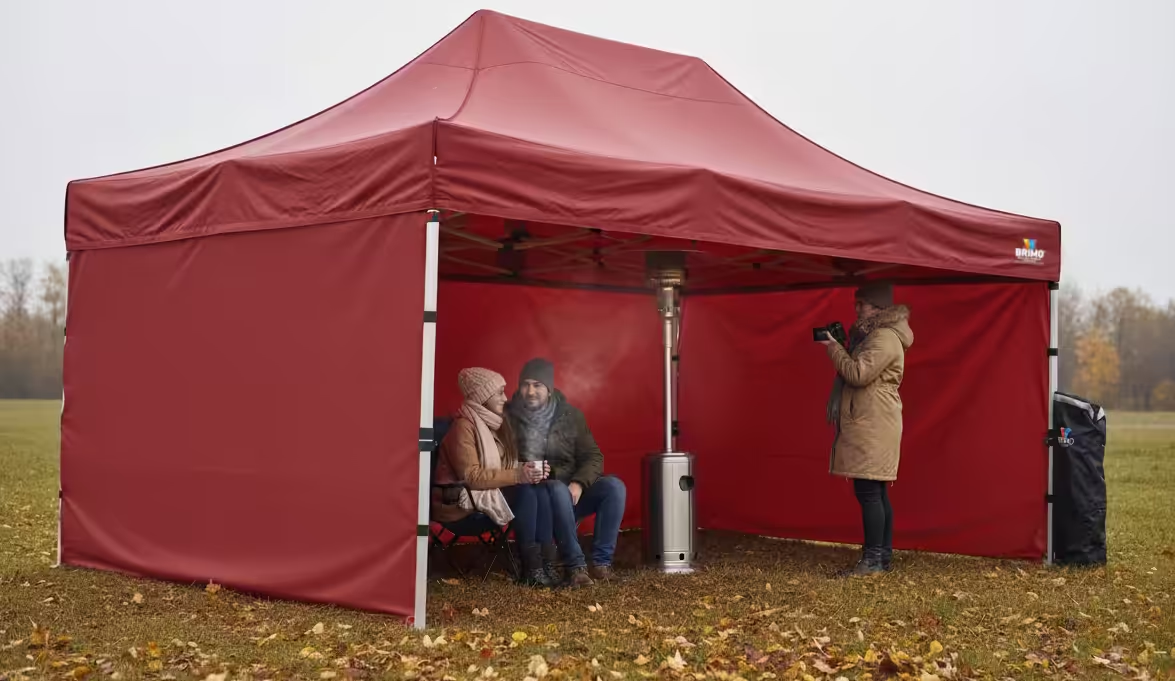
When choosing a heat source for your terrace or garden tent, we often face a dilemma between different technologies. The key to satisfaction is not just the power itself (stated in kW), but above all the way the device distributes the heat. A modern gas heater excels in this regard mainly due to its autonomy. Since it does not need a power supply, it eliminates the risk of tripping over extension cables and allows you to create a heat island practically anywhere – in the middle of the garden or under a mobile shelter.
Comparison: Gas Heater vs. Electric Infrared Heater
To make your decision easier, we have prepared a clear table comparing the key properties. Note especially the difference in use at low temperatures, where the correct choice of fuel plays a key role.
| Property | Gas Heater (Propane) | Electric Infrared Heater |
|---|---|---|
| Mobility | High (no cables, on wheels) | Limited (dependence on socket) |
| Power and Range | High (12-14 kW, suitable for larger areas) | Medium (directional heat, for smaller zones) |
| Performance in Frost (< 0°C) | Excellent (when using pure propane) | Good (but heats only the illuminated surface) |
| Atmosphere | Natural flame, aesthetic element | Functional red/orange light |
| Safety under Gazebo | Requires ventilation and precise distances | Lower ventilation requirements, caution with water |
Safe Operation Under Cover: Concrete Rules
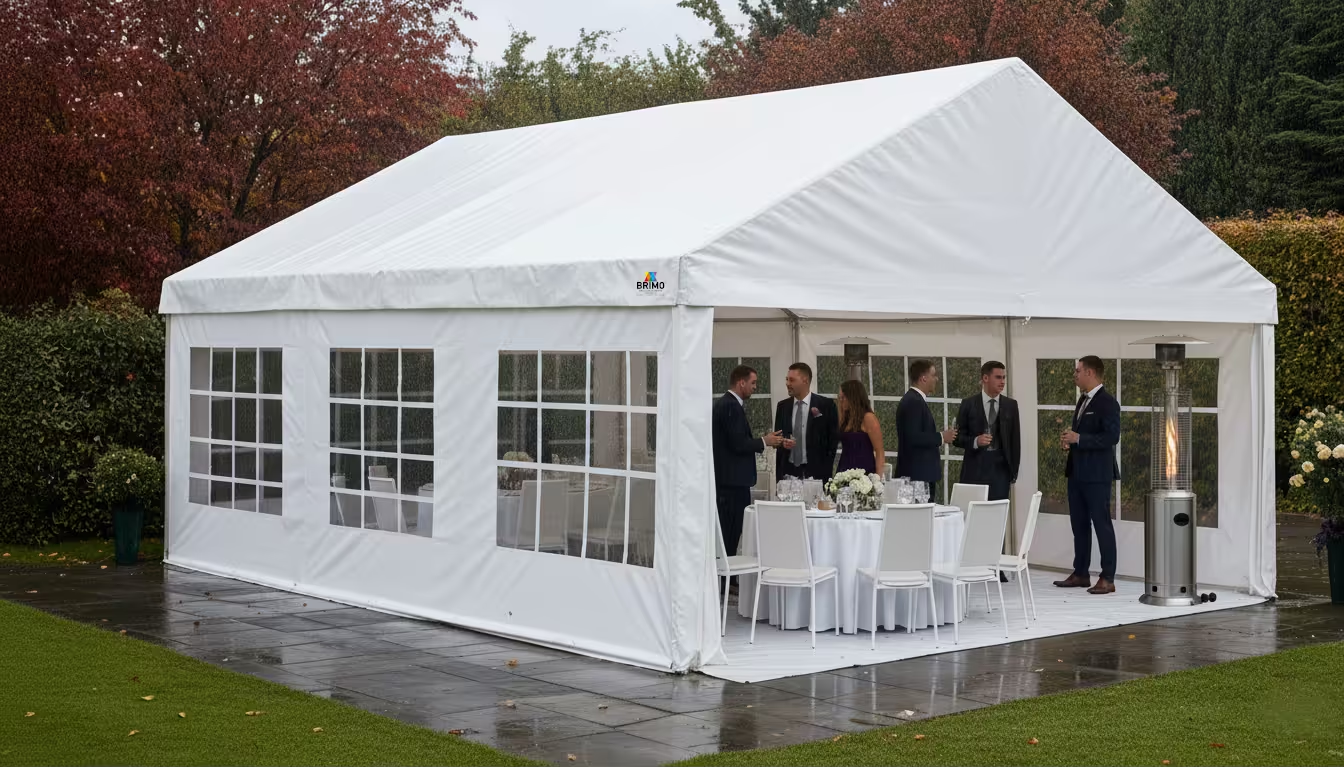
Although the radiant heat from a gas heater is extremely pleasant, when using it in partially enclosed spaces, such as party tents or glazed terraces, we must take physics into account. Combustion consumes oxygen, so it is critically important to ensure at least micro-ventilation (open entrance or ventilation holes).
Modern gas heaters are equipped with a tilt switch (shuts off gas if it falls) and a thermocouple (shuts off gas if the flame goes out). Nevertheless, observe these minimum distances: minimum 100 cm from the burner to the tent ceiling (or other obstacle above it) and at least 60-80 cm from walls and flammable materials on the sides. Heat rises upwards and to the sides, so placing it in the centre of the space guarantees not only the best heat distribution but also maximum safety.
An Investment in Warmth that Pays Off in Experiences
In conclusion, we can say that a high-quality gas heater is not just a technical accessory, but a true partner for anyone who loves spending time outside. Whether you are planning a family celebration under a gazebo, or just want to enjoy the silence of the evening garden, this device will provide you with the necessary comfort. With the right choice of fuel (propane in winter) and adherence to safety distances, you will get a reliable heat source. Leave the cold at the door and enjoy the magical atmosphere of the flame whenever you feel like it.
Supplementary Questions from Practice
To cover the topic comprehensively, we bring answers to two frequent questions regarding operation and maintenance. This information will help you get the most out of your gas heater while maintaining its long service life.
1. How long does a common 10 kg gas bottle last in operation?
Consumption depends on the burner power. In a common gas patio heater with a power of around 11 – 13 kW, consumption is approx. 0.8 to 1 kg of gas per hour at maximum power (full gas). A standard 10 kg bottle thus lasts 10 to 12 hours of intense heating. Tip from practice: After the initial heating of the space (approx. 30 minutes), we recommend reducing the power by half. Thermal comfort remains preserved, but you extend the bottle life up to 20 hours, which significantly reduces operating costs for one evening.
2. Can I leave the gas heater outside even during rain and snow?
Although high-quality outdoor heaters are made of stainless steel or powder-coated metal, the most sensitive part is the piezo ignition and the burner. Moisture can cause corrosion of contacts or clogging of nozzles. If you are not using the gas heater, definitely cover it with a waterproof cover or move it under a roof. You thus extend the life of the device by several years. Do not forget stability either – in strong winds, the high "mushroom" can act like a sail, so always anchor it or move it to a sheltered spot.
Written by:
Lukas Takumi
About the Author
Lukas Takumi – specialist in innovation and implementation of new technologies in portable structures and tent systems, with more than 10 years of experience in the field of mobile solutions for events and industrial applications.
He studied the implementation of the latest technologies at the University of Tokyo and participates in cooperation with the company BRIMO in the design and verification of innovative tents that guarantee safety, rapid assembly, and durability of materials.
His contributions focus on practical advice on the selection, maintenance, and safe use of pop-up gazebos and the integration of innovative solutions into daily operations.